
Canada is building closer ties with the European Union shortly after one of the bloc’s member states moved to expel a journalist in what is being condemned as a politically motivated deportation.
On October 13, Russian-born journalist Leonid Ragozin received a letter from the immigration ministry of Latvia, a country he had lived in for 12 years, informing him that his residency permit was being revoked.
The ministry said it was doing so on the basis of Ragozin being declared “persona non grata,” and explained that he would not be allowed to re-enter the country.
In the notice sent to Ragozin and seen by The Maple, the ministry also cited sections of Latvian immigration law that allow the authorities to cancel a residency permit if the holder has posed a security threat to Latvia, “publicly praised” a war crime or crime against humanity, or supported actors seeking to undermine democratic states.
It did not point to any specific statements or actions allegedly taken by Ragozin.
Ragozin is a staunch critic of Russian President Vladimir Putin and Russia’s invasion of Ukraine. However, he has also criticized Western countries, including the United States and its allies, for how they have handled the conflict and questioned their motivations for supporting Ukraine.
This has prompted some right-wing Latvian politicians to claim that Ragozin spreads “Russian chauvinism.”
Ragozin has also investigated ties between Latvian politicians and neo-Nazis in Ukraine, including those connected to the infamous Azov movement, prompting those involved to launch threats and smears against him.
In an interview with The Maple, Ragozin said Latvia’s cancellation of his residency permit bears the hallmarks of a politically motivated deportation.
“I’m receiving threats from major internet personalities,” he said. “They inform me privately by DMing, and also they announce it openly on Twitter that they will basically do their best to destroy my life in the next country where I find myself.”
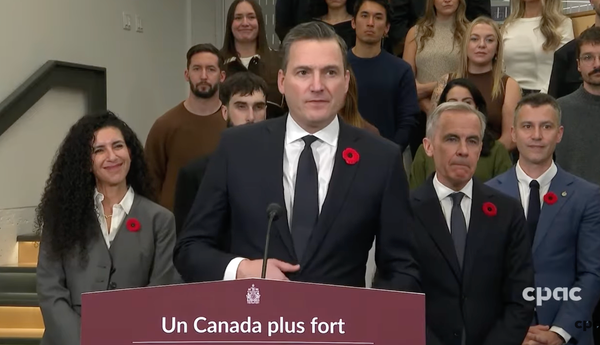
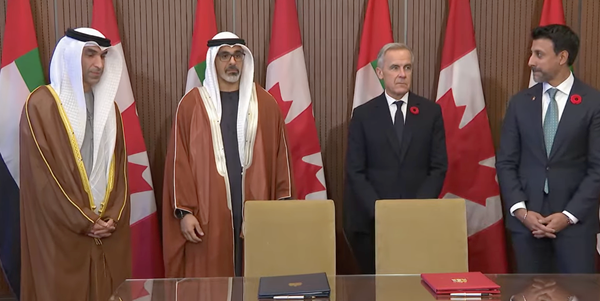
It’s a case that starkly contradicts Prime Minister Mark Carney’s idealistic rhetoric about the European Union and Canada having “shared values” in democracy and the rule of law ahead of this week’s Canada-EU Summit in Montreal.
During a keynote speech Thursday, European Commission President Ursula von der Leyen made a pitch to establish a partnership with Canada “that comes closer to membership than anything we’ve done before.”
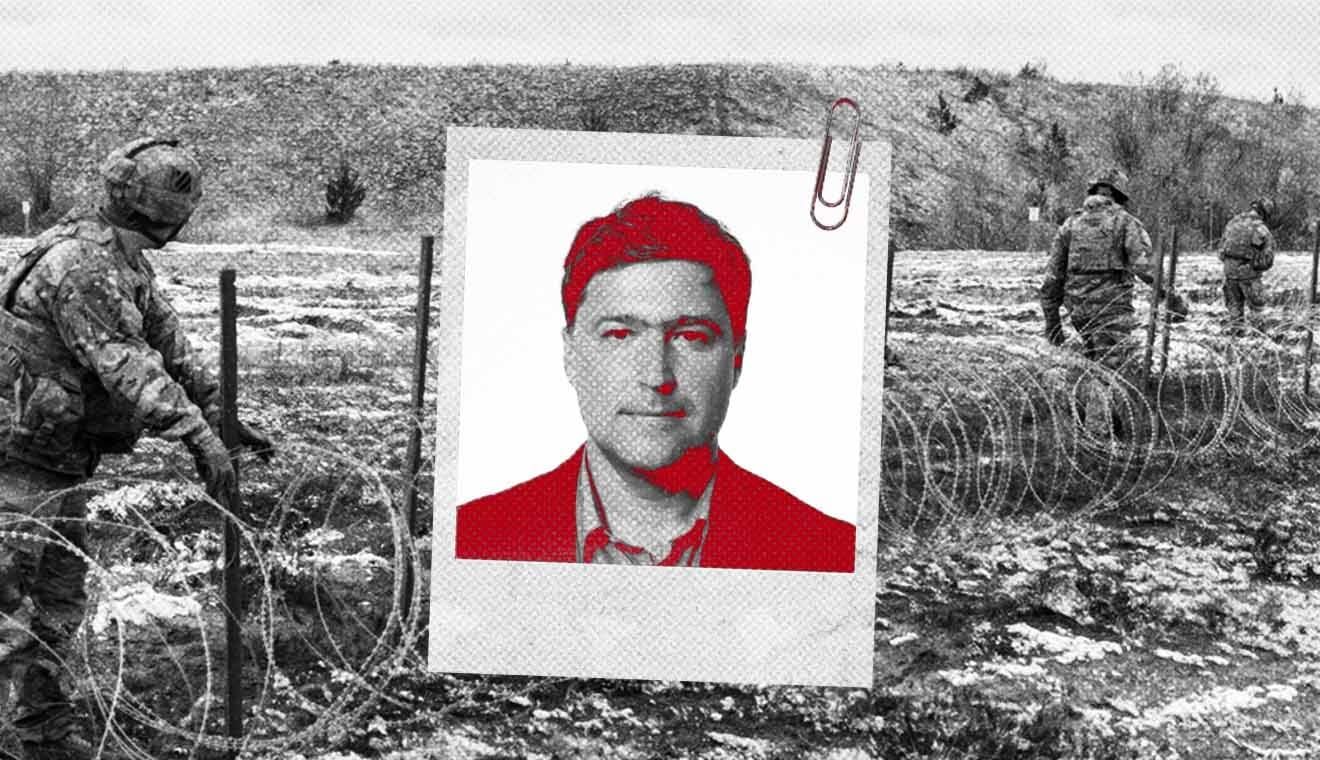
Ragozin’s case also raises questions about Canada’s military presence in Latvia, where Canadian troops are said to be defending “freedom, democracy and peace” as part of a NATO mission on the Russian border.
Years of Smears
Ragozin does not match the profile of a Kremlin propagandist. As a journalist, he spent years working for Western media outlets, including the BBC. In 2013, he began freelancing and became focused on the seismic political changes unfolding in Ukraine.
He moved to Latvia on March 16, 2014, the day Russia held a referendum on whether the Crimean Peninsula should remain a part of Ukraine or join Russia, which annexed the territory two days later.
“My initial reaction, my stance on the conflict that I had in 2014, was that it is an aggression against a neighboring country, and that the occupation is illegal,” he said.
“It is still my position on the conflict.”
“However, over those 12 years, I had this process in which a pile of questions was rising regarding the handling of this conflict by Western powers, by the United States, first of all, and about the motivation.”
Ragozin also investigated links between Latvia’s right-wing National Alliance party and neo-Nazis. In 2019, he reported that party members had travelled to Kyiv and met with Russian neo-Nazis, who were holding the annual festival of National Socialist Black Metal.
“Since early 2020, I became a target of a relentless smear campaign,” he explained. One politician, he said, issued what he interpreted to be a death threat against him.
He was also targeted by Ukrainian personalities after he investigated the assassination of journalist Pavel Sheremet, who was killed by car bomb in Kyiv in 2016.
During a collaborative investigation with the Ukrainian media outlet Zaborona, Ragozin uncovered evidence suggesting that the killing of Sheremet was likely carried out by individuals tied to Ukraine’s security services and organized crime.
A Political Football
The attacks against Ragozin ramped up during Latvia’s recent parliamentary elections. Two senior political candidates openly debated on Twitter about who should be responsible for deporting him.
“In the process of this discussion, senior members of National Alliance said openly that the interior minister, who is a representative from their party, could not deport me because if he did, then the matter would go into courts, and they said openly Latvia would lose the case in courts because, you know, there’s nothing against me,” said Ragozin.
The members suggested the foreign minister could declare Ragozin a “persona non grata,” a tool that is primarily used to expel foreign diplomats.
Three days after the election, Latvia’s Foreign Minister Baiba Braže announced that she was proclaiming an unnamed Russian citizen persona non grata. Ragozin then received notice of the revocation of his residency permit nearly one week later.
In an emailed statement to The Maple, Latvia’s foreign ministry said: “We reject the publicly circulated allegation that L. Ragozin has been expelled or deported from Latvia, nor is he being politically or extrajudicially persecuted.”
“In accordance with well-established principles of international law, Latvia has the sovereign right to regulate the presence of foreign nationals within its territory, including by placing individuals on the list of persons prohibited from entering Latvia.”
When The Maple told the ministry it had seen a copy of the government notice sent to Ragozin, the ministry declined to provide further comment.
Neither Canada nor the E.U. has commented on Latvia’s moves to deport Ragozin. Global Affairs Canada did not respond to an emailed request for comment from The Maple.
“I find this extremely regretful,” said Ragozin. “Most of all because I interpret this situation as an attempt to undermine the rule of law and freedom of speech in the European Union.”
Ragozin said he believes the threat that Russia poses to Latvia and other Baltic states “is real.”
“However, when it comes to domestic politics, the threat mongering, the war mongering, is a tool of political business,” he explained.
“It is a tool that is being used by politicians who I essentially believe to be bad actors, villains, in order to get more votes, more political support, and I believe economic benefits as well.”
A group called “Independent Journalists in Exile” wrote to two United Nations special rapporteurs on October 12 expressing concerns about the Latvian government’s moves to expel Ragozin.
The letter warned of “broader consequences for independent journalists who have left Russia and established their professional and personal lives in European democracies.”
“Such measures risk creating a chilling effect throughout the community of exiled journalists, encouraging self-censorship and discouraging legitimate public debate.”
Latvia has taken similar actions against other Russian citizens in recent years. Last year, left-wing activist Vladislav Romanenko received a deportation notice from the Latvian government, reportedly on the sole basis of his political activities.