
Global Affairs Canada (GAC) intervened to remove Israel as a listed destination for munitions components being sold to the United States government, the Quebec-based manufacturer of the goods said for the first time last month.
However, the Canadian Commercial Corporation (CCC), a Crown corporation that arranged the deal, still won’t rule out the possibility that the goods could end up in Israel.
The mixed messages raise questions as to whether Canada is actually preventing the weapons parts from being exported to Israel — or simply trying to remove public documentation of the transfer.
Rachel Small, an organizer with World Beyond War, believes it’s the latter.
“I think that the changes they are making now is actually just pushing for less transparency, for less details to be made public about where weapons are being made,” Small said.
“I think this was a moment where what the Canadian government is doing is saying, ‘Don’t implicate us.’ Not: ‘Hey, we are demanding that Israel not be an end user of Canadian weaponry.’ That’s what the Canadian government should be doing, and they can easily insist on that. They’re not actually insisting on that.”
Israel was listed as a destination for up to $55.1 million USD worth of M31A2, a propellant used in heavy artillery, ordered by the U.S. Department of War. The U.S.’s sole source supplier of M31A2 is General Dynamics Ordnance and Tactical Systems – Canada (GD-OTS Canada) in Salaberry-de-Valleyfield, Quebec.
The contract, which was signed in September 2024, is an amendment of a larger deal for the general supply of artillery propellants to the U.S. military that dates back to 2019 and is valued at a total of $1.79 billion.
The M31A2 propellant is used to shoot heavy artillery and is specifically required for a weapon system that fires 155 mm artillery shells. The shells have been identified as one of the primary drivers of civilian harm in Gaza.
The contract for M31A2 was signed as the Liberal government insisted that it had stopped all exports of military goods that Israel could use in its genocide in Gaza.
 Alex Cosh
Speaking at a public hearing about a proposed expansion of GD-OTS’ Valleyfield plant on February 18, the company’s strategic advisor, Daniel LePage, said in French comments that were translated into English for The Maple by a French-speaker:
“Last year, during the last... the last award of an M31A2 order from the US Army, in the list of destinations included in the contract, there was indeed a line item for Israel. CCC monitored that document, that contract, raised a red flag, contacted Global Affairs and the line item was removed from the contract. The contract was reissued excluding that destination.”
But the CCC, which helps Canadian arms companies secure contracts with foreign governments, will not rule out the possibility that some of the goods could still end up in Israel.
In an emailed statement to The Maple, a CCC spokesperson simply wrote: “There has been no confirmation of Israel as an end user of the M31A2 artillery propellant under this contract.”
The CCC issued an identical statement nearly a year ago, and has not responded to multiple follow-up emails asking if it received any guarantees from the Americans that the propellants will not be transferred to Israel.
The Maple asked GD-OTS if it could guarantee that the M31A2 it sells to the U.S. will not end up being used by Israel. A spokesperson for the company declined to respond, referring all questions to the U.S. Army.
The U.S. Army did not respond to multiple requests for comment.
GAC did not respond to specific questions from The Maple, and said it does not comment on specific transactions due to commercial confidentiality.
Military goods sold to the U.S. generally do not require export permits and are not tracked by GAC, meaning they can be resold to third countries such as Israel without Canada’s knowledge or any public documentation.
Between November 2023 and January 2025, GD-OTS Canada sent at least 125 shipments marked “ARTICLES EXPLOSIVES, NOS” (Articles, Explosives, Not Otherwise Specified) and “flammable solids” from Valleyfield to two key U.S. Army ammunition plants, including one that has a history of supplying munitions to Israel, a report from an alliance of advocacy groups called Arms Embargo Now said last year.
Removing “Israel” from one line in one contract may not actually prevent the U.S. from providing Israel with weapons systems that include Canadian M31A2 propellant, said Small, whose group worked on the Arms Embargo Now report.
“I think what we’re seeing with these contracts is just a few examples where what happens to be listed on those U.S. documents [...] notes that the end user is Israel, which is atypical,” she said.
“It’s actually rare for there to be the level of detail that happened to be on these contracts. So instead of addressing the bigger issue [...] they’re just editing the wording it sounds like on a couple of the contracts where they got caught red handed.”
Kelsey Gallagher, the author of a Project Ploughshares report about GD-OTS’ contract for M31A2, agreed the matter reflects a broader issue with Canada’s export controls.
“While the CCC deserves credit for removing Israel from this contract, in line with the federal government’s current policy, this, as in other cases, appears to be an ad hoc response to what is clearly a systemic issue,” Gallagher told The Maple in an email.
“Israel was identified as a proposed recipient only because an unknown American official happened to list the country in the contract’s description, which is atypical. Had that not occurred, these weapons would have been transferred to a country credibly accused of committing war crimes without any awareness on the part of Canadian authorities.”
“The obvious question, therefore, is how often this has happened without Canadian officials ever knowing.”
As reported by The Maple last year, CCC published an internal report identifying 99 cases of Israeli war crimes and other abuses, including those carried out with weapons supplied by the U.S.
 Alex Cosh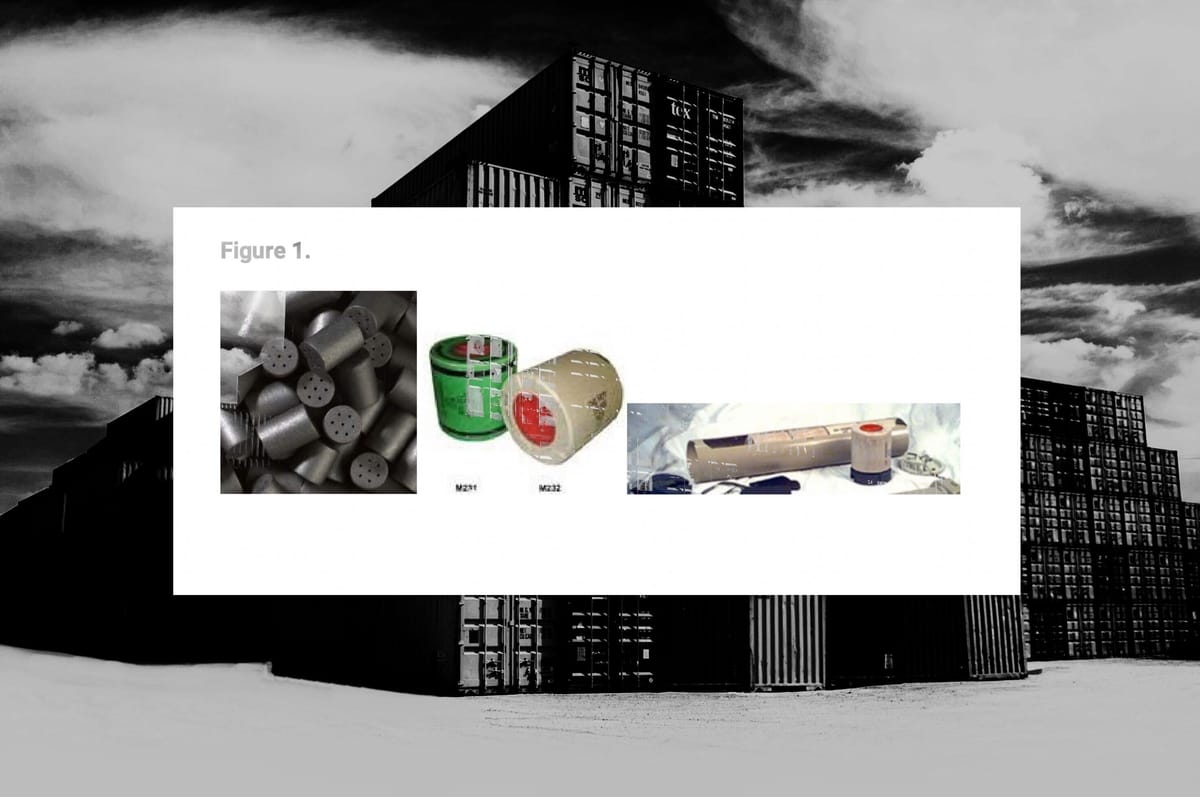
However, the CCC concluded that any risk associated with the M31A2 propellant contract had been “appropriately mitigated.” Details about how it arrived at that conclusion were redacted in a copy of the report obtained by The Maple.
More recently, CBC News reported that the CCC wrote to then-international trade minister Dominic LeBlanc in March 2025 notifying him of the contract.
It is not clear when GAC intervened to remove Israel as a listed recipient of the propellants.
Webpage Disappeared After Report
GD-OTS Canada is a subsidiary of American weapons giant General Dynamics, one of the largest arms companies in the world.
GD-OTS Valleyfield once described itself as the sole-source supplier of M31A2 for the U.S. military on its website, but the company has since scrubbed this information.
“The GD-OTS Canada propellant plant located in Valleyfield, Quebec specializes in the development and manufacture of extruded propellant,” a page previously posted to the GD-OTS Canada website stated.
“The plant is recognized worldwide for its large caliber propellant production mainly for artillery applications. It is the sole source provider for the US Army’s 155mm MACS High Zone propellant.”
The page is no longer available on the company’s website. It was removed sometime in late 2025 or early 2026, a search of internet archives show, after the Ploughshares report cited the page and made the connection between GD-OTS Canada’s artillery propellants and Israel’s use of 155 mm shells in Gaza.
But in French comments at a February 17 public meeting, LePage said the company’s Valleyfield facility invented the M31A2 propellant powder and “is the only qualified manufacturer at the moment, and in fact, for the last 20 years.”
A GD-OTS spokesperson declined to comment on the webpage’s removal.
‘A Strategy of Purposeful Negligence’
At the time GD-OTS’ 2024 contract for M31A2 was signed, Israel had already fired thousands of 155 mm artillery shells into Gaza, the Ploughshares report noted.
A group of humanitarian organizations had written to the U.S. Secretary of Defense 10 months prior about the dangers of such munitions, asking for shipments of the shells to Israel to be stopped.
“In Gaza, one of the world’s most densely populated places, 155mm artillery shells are inherently indiscriminate,” the letter, which was signed by Oxfam America, Amnesty International USA and other groups, said.
“These munitions are unguided and have a high error radius, often landing 25 meters away from the intended target. Upon impact, 155mm shells expel 2,000 sharp metal fragments in every direction, risking injury, death, and permanent disability to civilians within 300 meters of the blast. Simply put, it is difficult to imagine a scenario in which high explosive 155mm artillery shells could be used in Gaza in compliance with IHL [international humanitarian law].”
Activists have long raised concerns about the fact that Canadian military exports to the U.S. are not formally regulated and can be resold to third countries like Israel.
“A regulatory loophole exempts most U.S.-bound military goods from requiring permits, meaning that the vast majority of this weapons pipeline operates in a deliberate blackhole – hidden from public scrutiny, government tracking, and human rights assessments,” the report from Arms Embargo Now stated last year.
“This regulatory exemption allows more than 1 billion dollars worth of Canadian-produced components to be integrated into the U.S. military supply chain every year, without oversight or transparency, thereby circumventing Canada’s legal obligations for human rights due diligence.”
“Once these arms enter the U.S., GAC no longer tracks them. The Canadian government thus distances itself from the final use of these exports, and absolves itself from responsibility for any subsequent human rights violations perpetrated using those military goods.”
“This amounts to a strategy of purposeful negligence to avoid both the legal responsibility and the economic cost of properly regulating Canadian weapons exports.”
Small said GAC’s intervention in the M31A2 contract does not solve the larger problem of Canada’s inadequate controls on weapons components that flow through the U.S. “It’s not indicative of an actual effective arms control regime.”
The NDP recently proposed a bill to close the U.S. loophole, but a majority of Liberal MPs voted it down over concerns that such regulations might incur the wrath of the American government and harm Canada economically.
With files from Alex Cosh.




.jpg)
