More than 100 Quebeckers and 23 civil society groups have signed a memo calling on the Quebec government to reject a proposed expansion to a General Dynamics facility southwest of Montreal.
“The expansion of the General Dynamics facility is a moral disaster and Quebeckers say no,” reads the memo, which was submitted to Quebec environmental agency Bureau d’audiences publiques sur l’environnement (BAPE).
The plant in Salaberry-de-Valleyfield, Que. is operated by General Dynamics Ordnance and Tactical Systems – Canada (GD-OTS), a subsidiary of American weapons giant General Dynamics.
The Valleyfield factory produces what the company calls “energetic materials,” which are propellants used in mortars, tank ammunition and heavy artillery.
GD-OTS plans to spend $682 million to add 12 buildings to its 150-building campus in Valleyfield, according to BAPE.
The expansion is entirely funded by the U.S. military, GD-OTS strategic advisor Daniel LePage said at a public hearing on February 17, according to a transcript posted in French and machine translated into English.
The expansion will allow GD-OTS to increase its capacity to produce M31A2, a propellant used in heavy artillery, from 6 million pounds to 16 million pounds per year, LePage said at the meeting.
“So, the goal of the project is really to increase capacity,” the translation of LePage’s remarks says. “... Demand, due to certain situations you’re well aware of—the current situation, the conflict in Ukraine and the tensions around the world—means the product is in high demand. So, we were asked to manufacture more, and the only way to do that was to increase capacity by adding more production lines.”
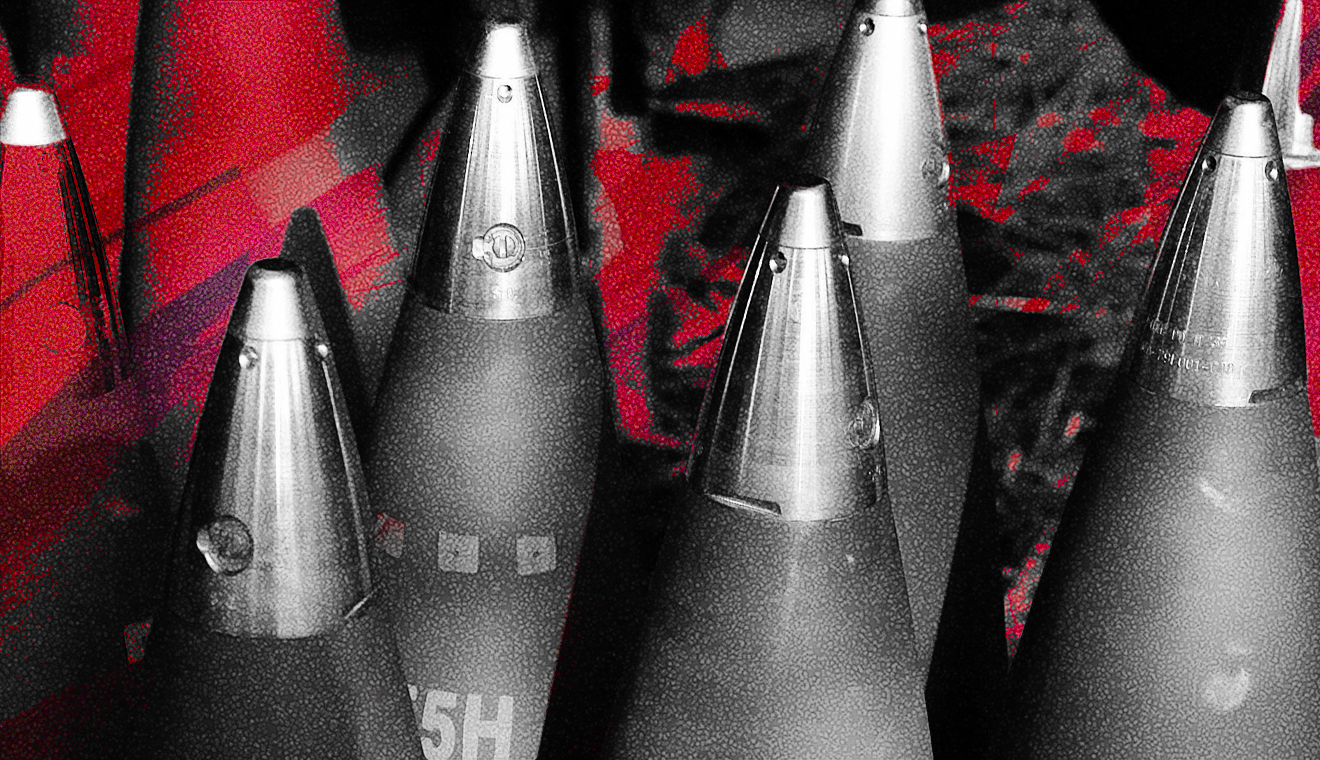
The M31A2 propellant is used to shoot 155 mm shells. According to a report published last year by the arms monitoring group Project Ploughshares, 155mm shells, mostly supplied by the U.S. government, have been identified as one of the primary drivers of civilian harm in Israel’s war on Gaza.
In September 2024, the U.S. Department of War listed Israel as a destination for up to $55.1 million USD worth of M31A2 produced by GD-OTS.
As previously reported by The Maple, LePage said at another hearing that Israel was removed as a listed destination for the propellant. But federal officials contacted by The Maple will not rule out the possibility that the goods might still end up in Israel.
 Emma Paling
The Ploughshares report noted:
“Since Russia’s invasion of Ukraine, the 155mm shell has become one of the most in-demand pieces of military equipment in the world, with global manufacturers posting record profits. This surge in demand has led to major investments to boost production, including scaling up capacity to produce the propellants that fire 155mm shells at the GD-OTS-Canada Valleyfield plant.”
In an email, a spokesperson for GD-OTS declined to answer questions from The Maple and referred all questions to the U.S. Army, which did not respond to a request for comment.
In their letter to BAPE regarding the plant expansion, Quebeckers opposed to the project invoked both Israel’s genocide in Gaza and U.S. aggression toward Venezeula, Iran and Cuba as reasons not to allow the expansion.
“In the past few months alone, the USA has initiated military conflicts on multiple continents, in Venezuela and Iran, and is now threatening Cuba,” the group wrote. “We should not be providing the USA with the propellant.”
It appears that BAPE, the Quebec government agency, has taken the opponents’ concerns into account.
Despite its focus on the environment, BAPE has written to both GD-OTS and the Canadian Commercial Corporation, a crown corporation that manages defence sales to foreign buyers, with questions about the rules around military exports, the end use of military products by countries like Israel, and how the plant will serve not just the interests of the U.S. but also of Canada.
In an emailed statement, a spokesperson for BAPE said the agency takes into consideration “the environmental, social, and economic dimensions of sustainable development.”
BAPE does not have the power to approve or deny the project, the spokesperson said. That power rests with the provincial government. The agency will make a recommendation to the government, however, which will be made public no later than July 1.
Tamara Ghandour, one of the signatories to the letter, said that their concerns with the project are both moral and environmental.
“Even though this facility itself doesn’t actually produce the final weapon product, it’s still obviously part of the chain, the chain of production,” they told The Maple in an interview.
“So we just don’t want … a company to be producing weapons in our backyard.”
With files from Alex Cosh