
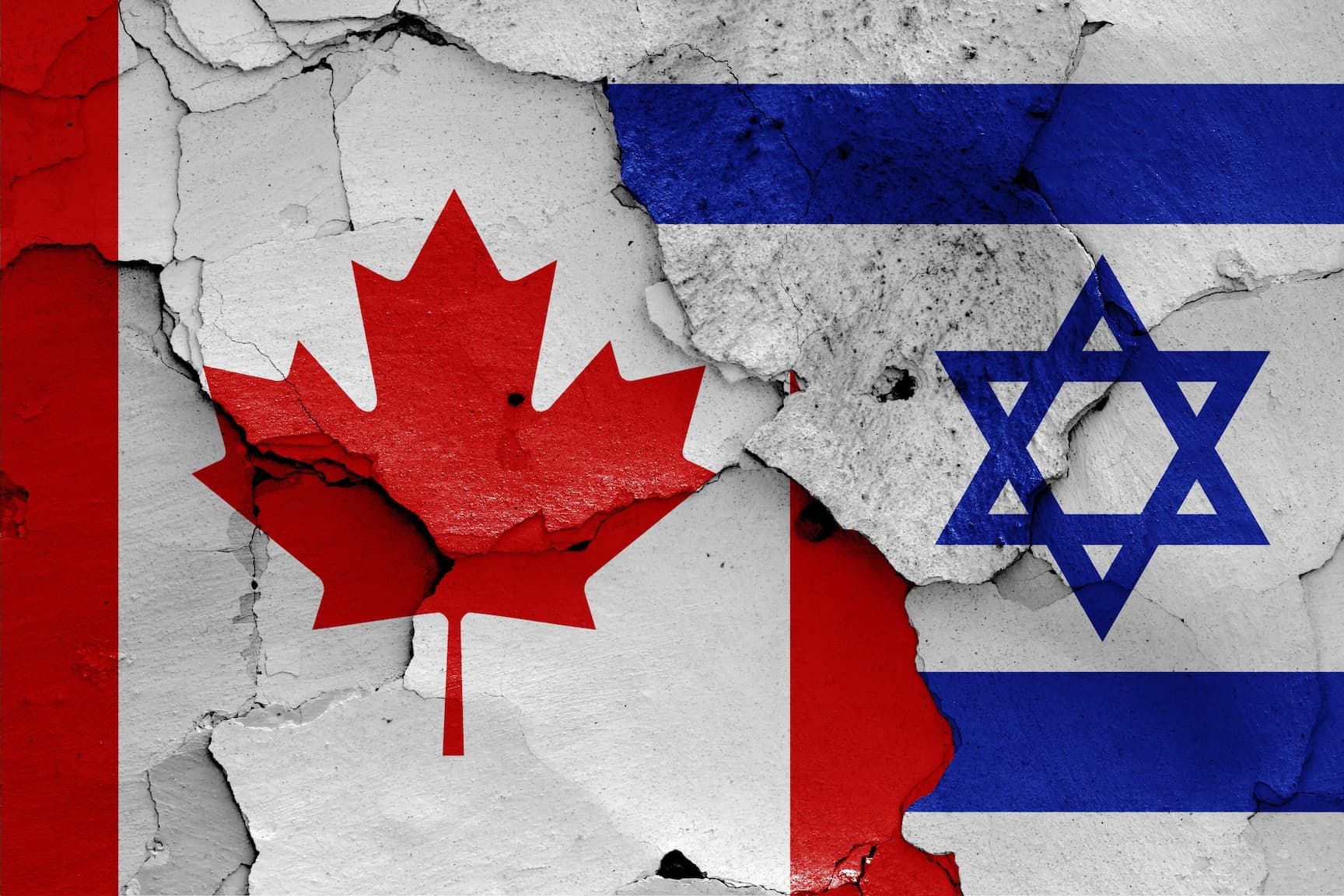
A new Pollara survey commissioned by The Maple found that 54 per cent of Canadians agree with making it illegal for Canadian citizens to serve in Israel’s military.
This group is composed of those who “strongly” (33 per cent) and “somewhat” (22 per cent) agree.
In comparison, 27 per cent said they disagree with making it illegal (11 per cent “strongly”), while 19 per cent said they “didn’t know.”
As such, Canadians are twice as likely to agree with making Israeli military service illegal than they are to disagree, and three times as likely to feel “strongly” about the former than the latter. Moreover, 67 per cent of Canadians with an opinion on the statement agree with it.
Pollara surveyed 1,546 randomly selected Canadian adults from March 27 to 30. The responses were largely consistent across demographic cohorts, including age, gender, income and education level.
It’s currently legal for Canadians to join the Israeli military, as the Foreign Enlistment Act only prohibits citizens from fighting for non-state forces, designated terrorist organizations and militaries of states at war with an ally.
The poll found that 47 per cent of Canadians said they agree with making it illegal for citizens to fight for the military of any foreign government. In comparison, 30 per cent said they disagree.
As such, Canadians expressed greater agreement with making participation in the Israeli military in specific illegal than in the militaries of foreign governments generally.
The survey also asked respondents whether they agree with making it illegal for citizens to join the militaries of two other Canadian allies currently engaged in wars: the United States and Ukraine.
Canadians expressed greater agreement with making Israeli military service illegal (54 per cent) for Canadian citizens than Ukrainian military service (44 per cent), but slightly less than for U.S. military service (55 per cent).
However, the Israeli military saw a larger percentage of respondents “strongly agree” with making participation in it illegal (33 per cent) than the militaries of the U.S. (32 per cent), Ukraine (23 per cent) and foreign governments in general (22 per cent).
Ongoing Israeli military actions are unpopular with Canadians.
A March Leger poll found that 58 per cent of Canadians oppose the U.S.-Israeli war on Iran, with just 25 per cent supporting it.
In addition, an August 2025 poll found that 52 per cent of Canadians believe Israel is committing genocide in Gaza and 64 per cent believe the “current humanitarian situation” there is a “moral outrage.” Twice as many respondents said their sympathies rest with the Palestinians as the Israelis.
As of March 2025, more than 1,500 Canadian citizens with at least one other nationality were serving in the Israeli military, according to a document from the Israeli government. This figure does not account for Canadian citizens who have yet to acquire Israeli citizenship.
There have not been any efforts from elected officials to make it illegal for Canadian citizens to serve in the Israeli military. However, some members of Parliament have called for investigations into those who have done so.
For example, NDP MP Heather McPherson sponsored a January petition calling for, among other things, the Canadian government to, “Initiate investigations under [the Crimes Against Humanity and War Crimes Act] into Canadian citizens and residents who served in the IDF, and if warranted, lay charges or refer to international courts,” and, “Issue warnings that Canadians serving/volunteering with the IDF may face criminal liability under Canadian law.”
The petition had more than 10,000 signatures as of April 6.
In contrast, other Canadian government officials have cheered on citizens serving in the Israeli military. In 2020, Canada’s ambassador to Israel held a pizza party for Canadians in the Israeli military, and told them, “We at the embassy are very proud of what you’re doing. It’s really quite incredible.”
There’s a long history of Canadian citizens joining the Israeli military.
As noted in Find IDF Soldiers, a 2025 database from The Maple:
“For the better part of the past century, some Jews in Canada have been travelling to Israel to fight alongside other Jewish Zionists from around the world.
At first, these Canadians, along with some non-Jewish ones, fought with Zionist militias to establish the State of Israel, which was done through the ethnic cleansing of Palestinians from their land. In the decades since, at least hundreds of Jewish Canadians have willingly joined the Israeli military, and aided the state in its wars and occupation of neighbouring land.
Throughout this time, the Israeli military has been credibly accused by and/or before major international bodies of ethnic cleansing, war crimes, apartheid, and now genocide. Israeli soldiers have also provided the physical force necessary to uphold practices the Canadian government has condemned, such as the occupation of the West Bank and the creation of new settlements.”
Find IDF Soldiers contains profiles of 206 Canadians who have joined the Israeli military, the vast majority of whom are Canadian citizens.
Along with this database, The Maple published a composite of the average Canadian Israeli-military member based on an in-depth analysis of the profiles, which included: where they were born and grew up, what schools and institutions they attended, when they joined the Israeli military and why, if their participation was encouraged by family members and social networks, what they did in the military and what they’ve had to say about it.
The article concluded: “The vast majority of Canadian Jews do not join the Israeli military. However, mainstream Jewish institutions in the country — synagogues, schools, camps, etc. — generally valorize the Israeli military, pass this framing of it on to youth and offer opportunities for them to immigrate to Israel, which almost always entails becoming a soldier. Those who join the military are not on the fringes of their community, but rather have taken the direction by mainstream institutions to serve Israel to its furthest extent.”
Pollara is a member of the Canadian Research Insights Council, and this research was conducted in compliance with its standards. Online surveys don’t allow for the application of a margin of error, but a probability sample of this size carries a margin of error of ±2.5 per cent, 19 times out of 20.
 Alex Cosh