
The Mark Carney government has confirmed it will spend $2.6 billion on a type of American missile system that the United States has used to bomb Iran.
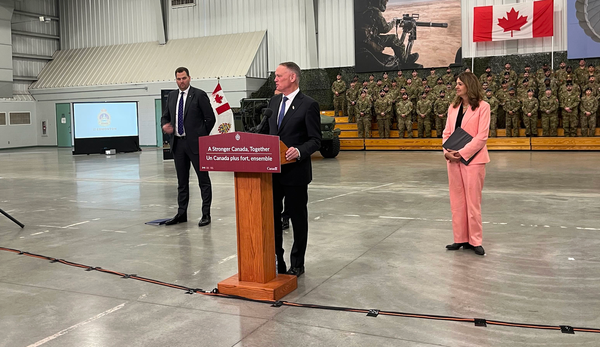
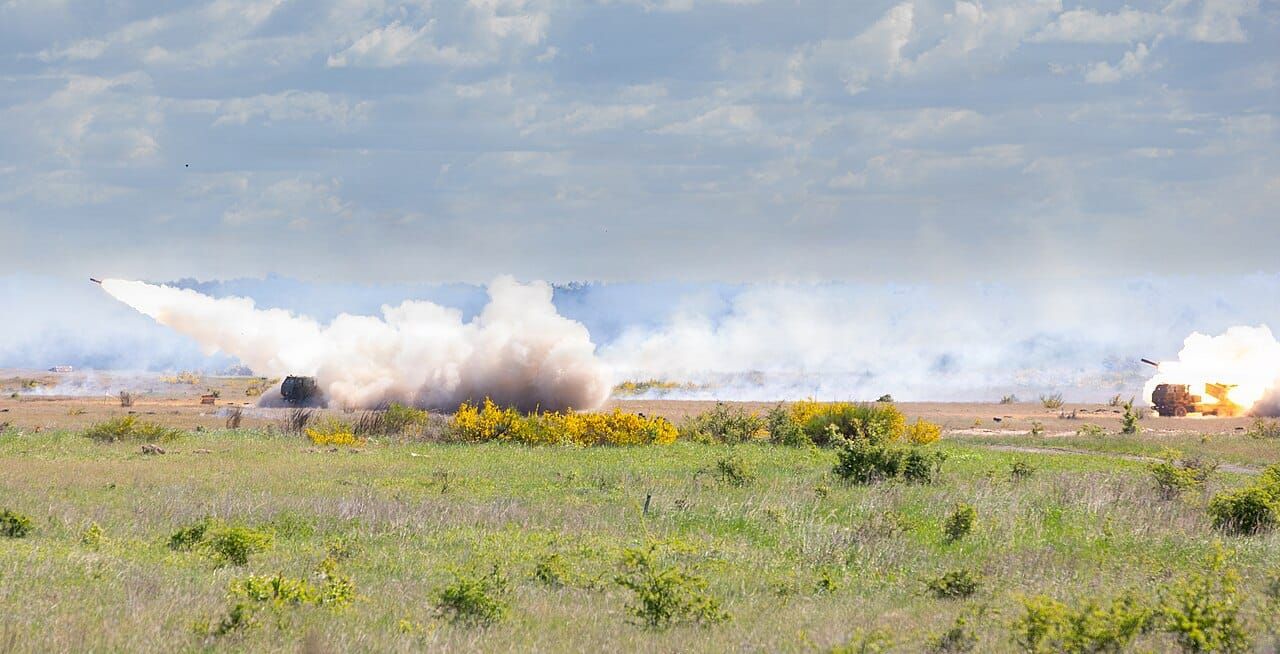
The Department of National Defence (DND) said yesterday it finalized a deal with the U.S. to acquire 26 High Mobility Artillery Rocket System (HIMARS) launchers, a preliminary stock of munitions, spare parts, training and support services back in January.
The missile systems, made by American arms dealer Lockheed Martin, have been used extensively in the U.S.-Israeli war on Iran, and featured prominently in American propaganda videos during the campaign, dubbed “Operation Epic Fury.”
In a post featuring one of the videos, U.S. Central Command said: “In a historic first, long-range Precision Strike Missiles (PrSMs) were used in combat during Operation Epic Fury, providing an unrivaled deep strike capability.” Lockheed Martin’s official X account re-posted the video.
In March, a Leger poll found a clear majority of Canadians opposed the U.S.-Israeli war of aggression against Iran. Ceasefire negotiations between Iran and the U.S. are officially ongoing but have remained stalled.
DND’s announcement signals Canada’s continued military integration with the U.S. despite the Trump regime’s ongoing hostility towards Canada and its wars of aggression around the world.
 Alex Cosh
Just yesterday, U.S. President Donald Trump repeated his threats to turn Canada into the “51st State.”
In yesterday’s announcement, DND said: “HIMARS was identified as the only solution that best met Canada’s operational and technical requirements.”
“As part of Canada’s Industrial and Technological Benefits Policy obligations, Lockheed Martin Missiles and Fire Control will undertake meaningful business activities and invest in Canadian industry to support the growth of Canada’s defence sector.”
The statement included no further details about Lockheed Martin’s promised business activities and investments in Canada. In its own press release, Lockheed Martin said:
“Over 10 years, Lockheed Martin will invest in Canadian small and medium-sized businesses, research entities, and indigenous partners on projects such as advanced helicopter electro‑optics, clean‑energy dual‑use technology, a self‑contained UAV manufacturing system, and Arctic‑focused defence/commercial infrastructure, fostering export potential and national sovereignty.”
The company emphasized that the missile launchers are “capable of accurately striking long-range targets” and are “rapidly deployable and interoperable with NATO allies.”
Deliveries of the weapons are expected to begin in 2029.