The new pipeline championed by the federal government has nothing to do with appeasing separatists in Alberta, Prime Minister Mark Carney said Wednesday.
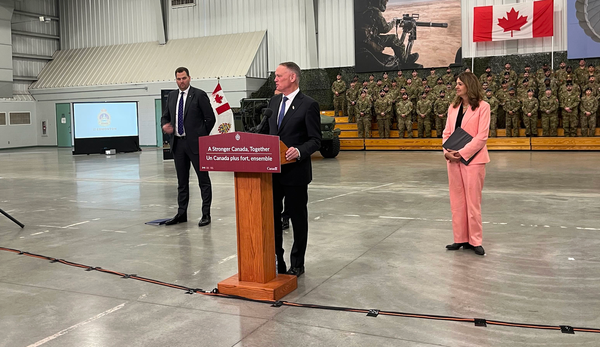
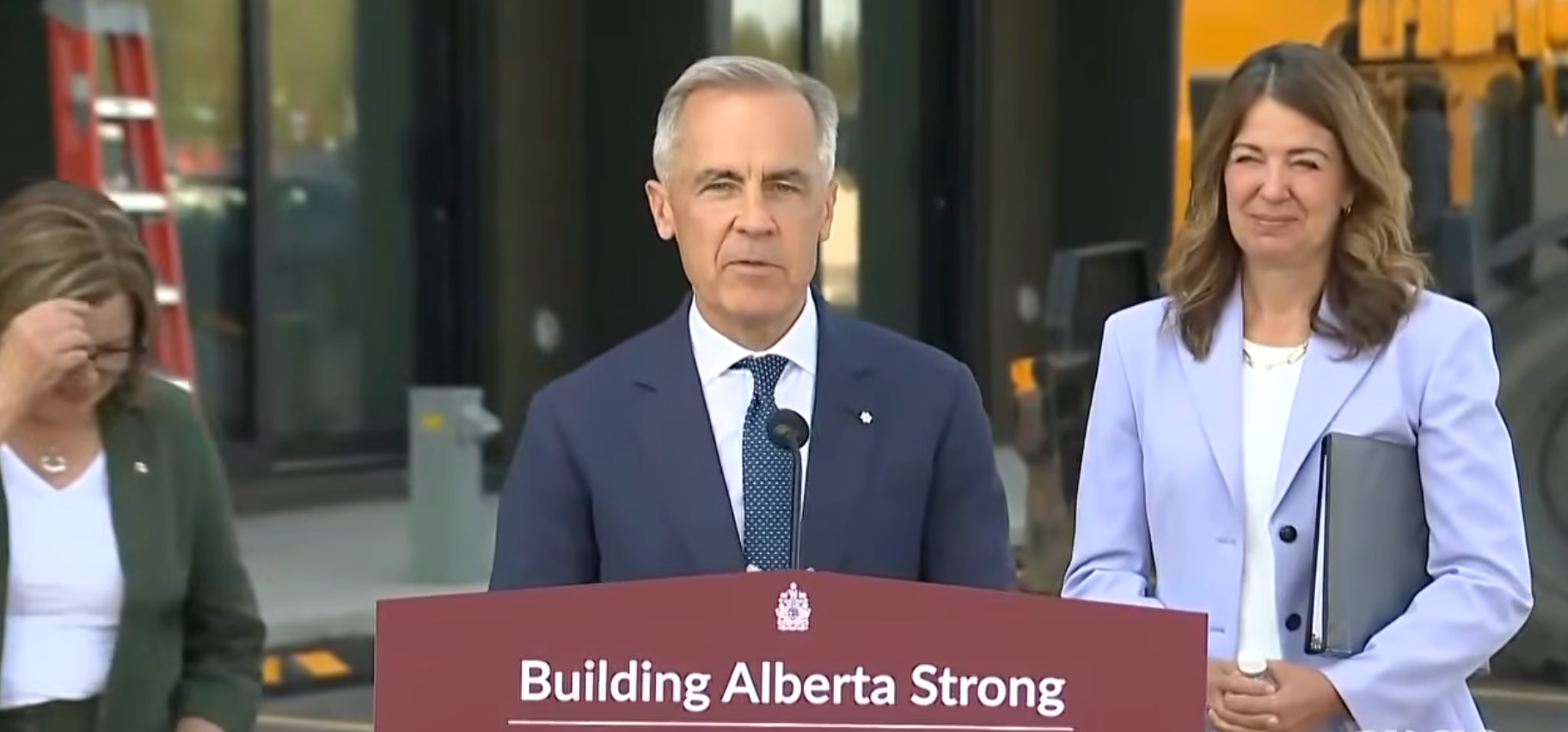
“The referendum, that doesn’t enter into the calculus. It’s a bigger issue, a more fundamental issue,” he said at an announcement in Red Deer, Alta. alongside Alberta Premier Danielle Smith.
The bigger factor is for Canada to remain a reliable supplier of oil, Carney said.
“One of the biggest commodities, arguably the best, is trust. People trust us. And so, when you’re a supplier of a key commodity, a key service, you’ve got to think really hard about not supplying [that commodity].”
On July 2, Carney and Smith announced the route of a proposed new pipeline from Bruderheim, Alta. to the southern coast of British Columbia. The pipeline would be capable of moving 1 million barrels per day of crude oil.
Supporters of the separatist movement in Alberta have complained about federal policies towards the oil and gas industry as a motivating factor behind their cause.
“We have anti-oil regulations and legislation that has curtailed the growth of the oil industry,” Kim Stevens of Raymond, Alta. said in an interview with CTV News earlier this month.
Canada’s oil and gas industry is expected to make as much as $100 billion in profits in 2026 — a threefold increase over the originally expected $30 billion, because of the U.S. and Israel’s war on Iran. Still, industry leaders said in April they’ll return money to shareholders instead of investing in new projects.
The separatist movement has also used images of men working on oil rigs in order to attract supporters who yearn for a past when the oil industry was booming, one researcher previously told The Maple.
About nine to 11 per cent of Albertans are “soft separatists” who could be swayed to vote against holding a referendum on independence in the upcoming October vote, according to pollster Janet Brown.
A new pipeline could become a factor for those voters, Brown told CBC News.
“This could be proof to them that Canada can work, that Alberta can make headway [in] the things the premier has said about trying to make progress within the federation rather than without,” she said.
The new pipeline would add between 20 and 28 megatonnes of carbon to Canada’s annual emissions, advocacy organization Environmental Defence has said, at a time when Canada is already falling behind on its promise to reach net-zero emissions by 2050.