
Two Canadian-owned companies are accused of failing to seek free, prior and informed consent from Indigenous peoples in Nevada before going ahead with major lithium mining projects, a new report released by Amnesty International says.
The report alleges that a total of three lithium projects in the American state are proceeding without having obtained appropriate consent from local Indigenous peoples. Two companies headquartered in British Columbia, Lithium Americas Corporation and Surge Battery Metals, jointly own two of the projects.
According to local Indigenous peoples and subject matter experts interviewed for the report, the mines risk depleting scarce ground water reserves, harming local biodiversity, causing air pollution and desecrating sacred ancestral lands.
The report alleges that the United States government did not obtain free, prior and informed consent from the affected communities as required by the United Nations Declaration on the Rights of Indigenous Peoples (UNDRIP).
The U.S. has not codified UNDRIP or its requirements into law, but has previously expressed support for the declaration.
According to Amnesty International, companies must take steps to obtain meaningful consent from Indigenous communities for their projects when governments fall short of doing so.
Canada, meanwhile, codified UNDRIP in 2021 and is required to ensure that companies headquartered within its jurisdiction respect Indigenous rights wherever they operate, Amnesty says.
However, Tara Scurr, Amnesty International Canada’s corporate accountability and climate justice campaigner, told The Maple that Canada has not legislated accountability mechanisms for Canadian corporations that operate overseas, despite decades of pressure from civil society organizations calling for the federal government to do so.
“It’s well known that Canadian companies violate the rights or abuse the rights of Indigenous peoples in their overseas operations,” said Scurr. “Yet we still don’t have the political will to put in place accountability mechanisms or human rights due diligence.”
“As we’re pushing and fast tracking these mines, we’re overturning environmental protections and other legislation. We are really exposing people’s human rights to significant risk.”
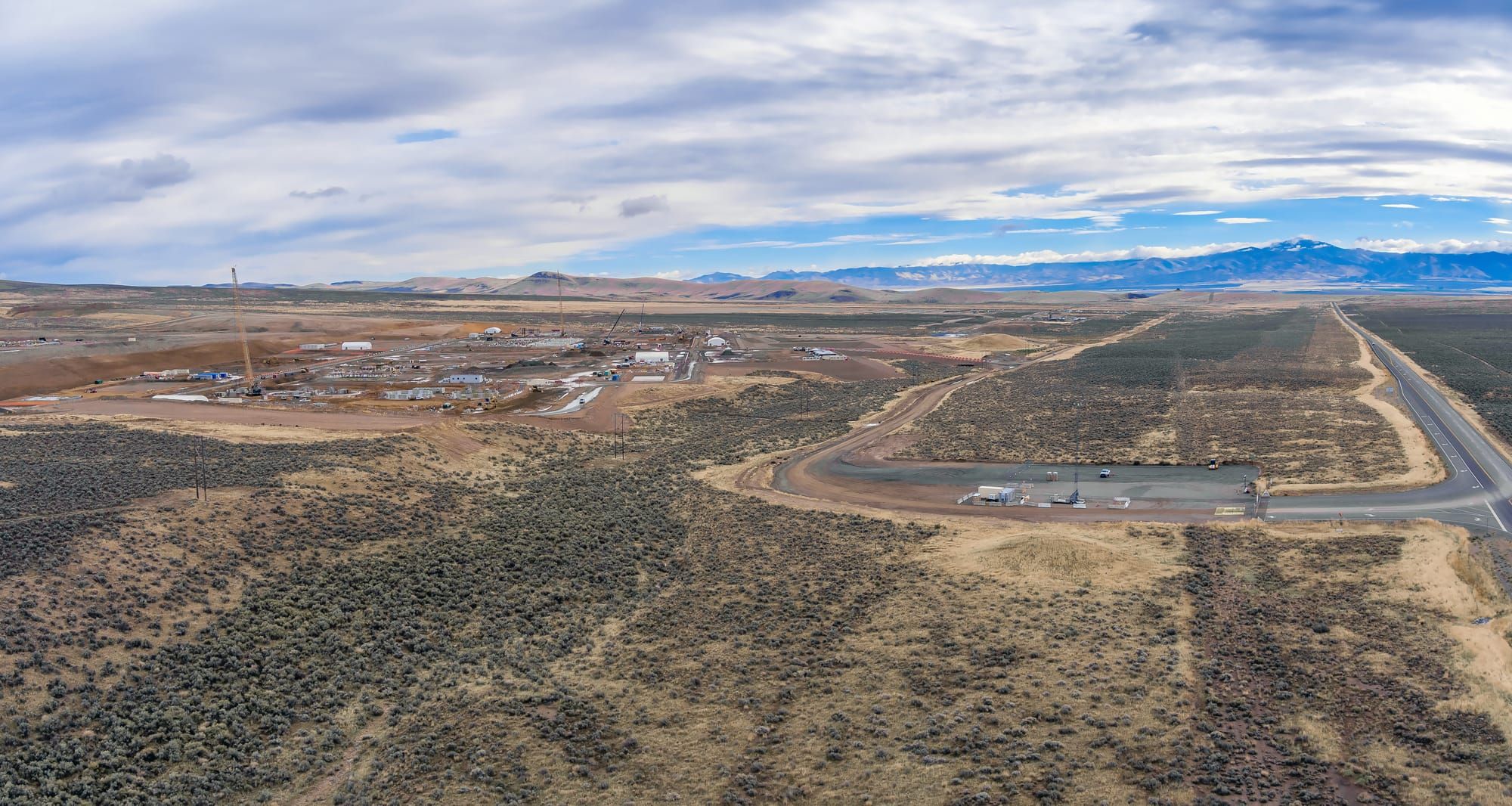
Lithium Americas Corporation is based in Vancouver and its American subsidiary is developing the Thacker Pass Lithium Mine in northern Nevada. The U.S. government holds a five per cent stake in both the company and the project itself, according to the report.
The project is located on lands claimed by six Indigenous tribes, some of which have filed lawsuits claiming that the U.S. government failed to properly consult them. These legal efforts, however, have largely been unsuccessful, the report says.
On its website, Lithium Americas states that lithium is “vital for America’s national security and economic resilience” and cites concerns expressed in a White House executive order about how “overreliance on foreign critical minerals could jeopardize U.S. defense capabilities, infrastructure development and technological innovation.”
Lithium is commonly referred to as a “critical mineral” due to its importance in manufacturing lithium-ion batteries that are used for electric vehicles and in military applications, including in first-person view combat drones. Lithium is also used in back-up power systems for artificial intelligence data centres.
China currently refines about 72 per cent of global lithium supplies, creating a dependency on China that has unnerved foreign policy hawks in the U.S. and Canada.
Canada itself is seeking to become a critical minerals powerhouse to help alleviate fears about China’s current domination of the market, and is looking for $72.4 billion of investment by 2034 to realize that ambition.
In a letter sent to Amnesty International and included in the report, Lithium Americas said it was “dismayed” that the human rights organization did not contact the company prior to completing its investigation.
The letter states that the U.S. Bureau of Land Management (BLM) “permitted the Project after years of government-to-government consultation with Tribes in the area, and federal courts have repeatedly upheld BLM’s consultation as consistent with federal law.”
“Further, BLM produced a detailed environmental impact statement (EIS) for the Project addressing issues including cultural resources, socio-economic factors, air and water quality, tailings and reclamation, and water quantity. Courts have repeatedly upheld BLM’s process and analysis.”
It also stressed that the U.S. government has said UNDRIP is not “legally binding,” and noted that the Thacker project site itself is located outside of federally recognized reservation lands.
The Maple emailed Lithium Americas asking for it to provide further comment following the publication of the Amnesty report. A company spokesperson said they had nothing more to add. A full copy of the company’s response letter is included at the end of this article.
Surge Battery Metals is based in West Vancouver and is jointly developing the Nevada North Lithium Project. On its website, the Canadian company describes the project as “one of discovery and national purpose.” At least six Indigenous tribes have ancestral claims to the affected lands, according to Amnesty.
Surge Battery Metals did not respond to Amnesty International’s inquiries, according to the report. The Maple independently reached out to the company for comment, but did not receive any response.
The Maple also reached out to Global Affairs Canada and Natural Resources Canada, but did not receive responses from either department.
Nevada is home to approximately 85 per cent of all known lithium reserves in the U.S., according to multiple sources. Amid a race to secure “critical minerals,” the U.S. government has prioritized speeding up project development over rights protections, the Amnesty report says.
Fermina Stevens, a member of the Te-Moak Tribe of Western Shoshone and one of the report’s authors, told The Maple that Indigenous peoples are lectured about the importance of critical minerals to U.S. national security while the projects that extract those minerals risk seriously harming their ancestral lands.
“We can’t save the earth while we’re destroying biodiversity. You know, while we’re destroying water, we’re not going to save the earth while we’re destroying it,” said Stevens. “When the water is gone, or when these minerals are gone, we will be left with the mess that they’ve created.”
“With these wars that are going on, the United States needs to replenish its arsenal. So, you know, that’s where the where the minerals come into play, so that they continue to enrich the military complex. Because I think we’re a war-mongering country.”
Mary Gibson, also a member of the Western Shoshone, told The Maple that the U.S. government has consistently broken its treaty agreements with her people.
“They’ll go above and beyond to permit these mines ... and it’s just so sad to see the state of our state is basically all about the dollar signs and how much money could be made today,” said Gibson.
“The fact that the U.S. has dispossessed us of our land, and they call it public lands, affects me more than anything, because I hold on to all this colonial trauma that they put upon us, forced upon us, and that’s not an easy life to live, because it makes me angry. It makes me sad.”
Canada, according to the human rights group, also shares responsibility for ensuring that the projects developed by Canadian companies respect Indigenous rights.
In British Columbia, where the two Canadian lithium mining companies named in the report are headquartered, Premier David Eby recently announced plans to amend the province’s Declaration on the Rights of Indigenous Peoples Act (DRIPA) to suspend some of the law’s imperative language.
Following severe push back, however, the B.C. government backed down and instead proposed working with First Nations to find a compromise before the fall legislature session begins in October.
The Amnesty report makes several recommendations regarding the Nevada projects, including that the U.S. government revoke permits where free, prior and informed consent has not been obtained; that the companies suspend their mining activities until appropriate consent is given; and that the companies’ home states, including Canada, require companies to respect human rights throughout their global operations.