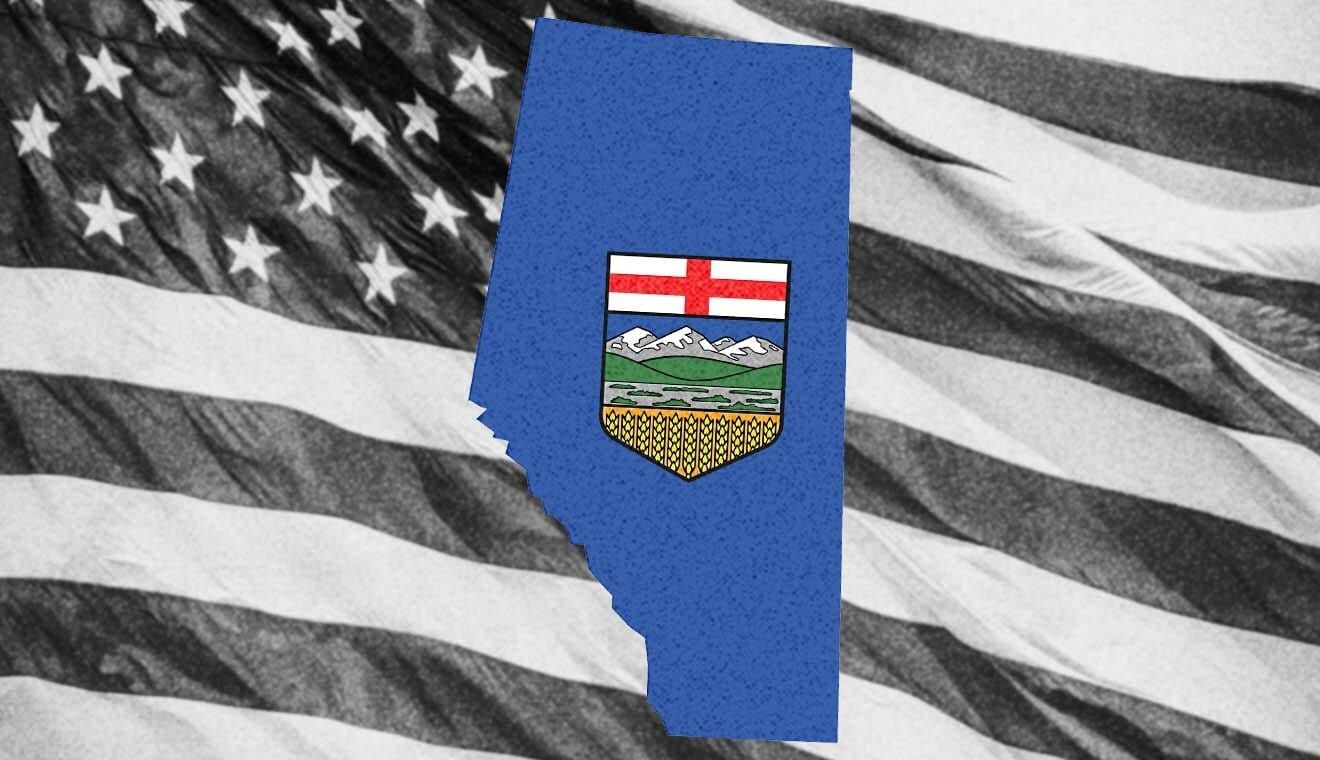
In the four months since it was reported that U.S. government officials met with Alberta separatists, the issue has barely warranted a mention in Canada’s House of Commons.
The only MP to raise the issue, The Maple has found, is Green Party Leader Elizabeth May.
The meetings are also being ignored or downplayed more broadly across the federal government.
In a press release published by MPs about a recent trip they took to Washington, D.C., the issue wasn’t mentioned at all.
And in an interview on CBC radio on May 9, the head of Canada’s spy agency implied that meetings between separatists and U.S. officials did not meet the threshold of foreign interference.
Avi Lewis, who does not sit in Parliament but is the leader of the NDP, posted a video to X in February alleging that the U.S. could “potentially” be funding the separatism movement.
“The Alberta separatist movement is a MAGA-aligned and potentially U.S.-funded, absolutely Trump-supported movement which is trying to get us Canadians attacking each other when we are under threat from the United States. We have to resist it,” Lewis said.
“Albertans know better than anyone else: this is a classic example of foreign interference in our country.”
NDP MP Heather McPherson, who hasn’t raised the issue in the House, said on social media that she’s angry some separatists would be willing to work with U.S. President Donald Trump.
May Alone Raises Issue
In February, May asked Liberal House leader Steven MacKinnon:
“Is there anything being done and what is being done now to consider the threat of foreign interference to provincial referenda that could break up this country, when we know people in the White House are encouraging separatism? What are we doing to prepare?”
In response, MacKinnon did not mention the U.S. or list any concrete steps being taken by the government to fend off its encouragement of Alberta separatism.
“Foreign interference at any level and transnational repression at any level of our democracy are absolutely unacceptable,” MacKinnon said. “We have taken careful note of the recommendations of the Hogue commission [on foreign interference], and I and my colleagues will be responding more fully in due course.”
The Maple reviewed transcripts of every Question Period for the week after the story about the meetings between separatists and American officials broke and found that it was not mentioned.
The Maple also conducted searches of House of Commons transcripts for keywords related to the story. The searches returned no results about the meetings between U.S. officials and Alberta separatists.
Jeffrey Rath, a prominent Alberta separatist, confirmed to the Financial Times in January that he had attended meetings with U.S. State Department officials in Washington.
“The U.S. is extremely enthusiastic about a free and independent Alberta,” he said at the time.
Rath is the legal counsel for the Alberta Prosperity Project, a group that supports Alberta separatism.
The group has said it is seeking a $500-billion line of credit from the U.S. to fund an independent Alberta if a referendum on secession is successful.
Alberta Premier Danielle Smith has said Albertans will vote in October on whether or not to hold a legally binding referendum on the question of independence at a later date.
Scott Bessent, the U.S. Treasury Secretary who said Alberta is a “natural partner” for the U.S., has also not been mentioned by MPs in the House of Commons.
During days of debate about foreign interference in April and May that centered on the Liberals’ Strong and Free Elections Act, not one MP referenced the U.S. meddling in Canadian affairs.
Instead, the discussion focused on foreign interference in general, and foreign interference by China and Iran.
MPs Return from Washington
On Wednesday, MPs from the House of Commons foreign affairs committee published a press release about a trip to Washington, D.C. taken May 11-14.
“The primary purpose of the visit was to reinforce the importance of the multifaceted Canada-U.S. relationship,” the press release said.
“A central focus of the delegation’s meetings was the impact of American sectoral tariffs on workers, consumers and industries, and the forthcoming joint review of the Canada–United States–Mexico Agreement.”
It did not mention that Alberta separatists met with U.S. officials.
Conservative MP Michael Chong, a vice chair of the committee, declined to answer The Maple’s questions about whether the topic came up behind closed doors.
Committee chair and Liberal MP Ahmed Hussen did not respond to questions sent by email. Nor did Bloc Québécois MP and vice-chair Alexis Brunelle-Duceppe.
CSIS Focused on Russia
The head of the Canadian Security Intelligence Service (CSIS) recently suggested that Russia is the main foreign actor poised to interfere in the referendum.
“A referendum like the one in Alberta that may have a divisive effect on society is ripe for amplification or the type of disinformation or foreign interference that we’ve seen from Russia in the past,” CSIS director Dan Rogers said on CBC’s The House earlier this month.
“Russia is an actor that has regularly across the world sought to amplify divisive narratives, to sow distrust in institutions, and has shown a proclivity to looking at democratic processes,” he said.
When host Catherine Cullen specifically asked about the U.S., Rogers said that “overt commentary” does not constitute foreign interference.
Spokespeople for CSIS did not immediately respond to questions from The Maple about why Rogers implied the separatist meetings with U.S. officials did not constitute foreign interference.