
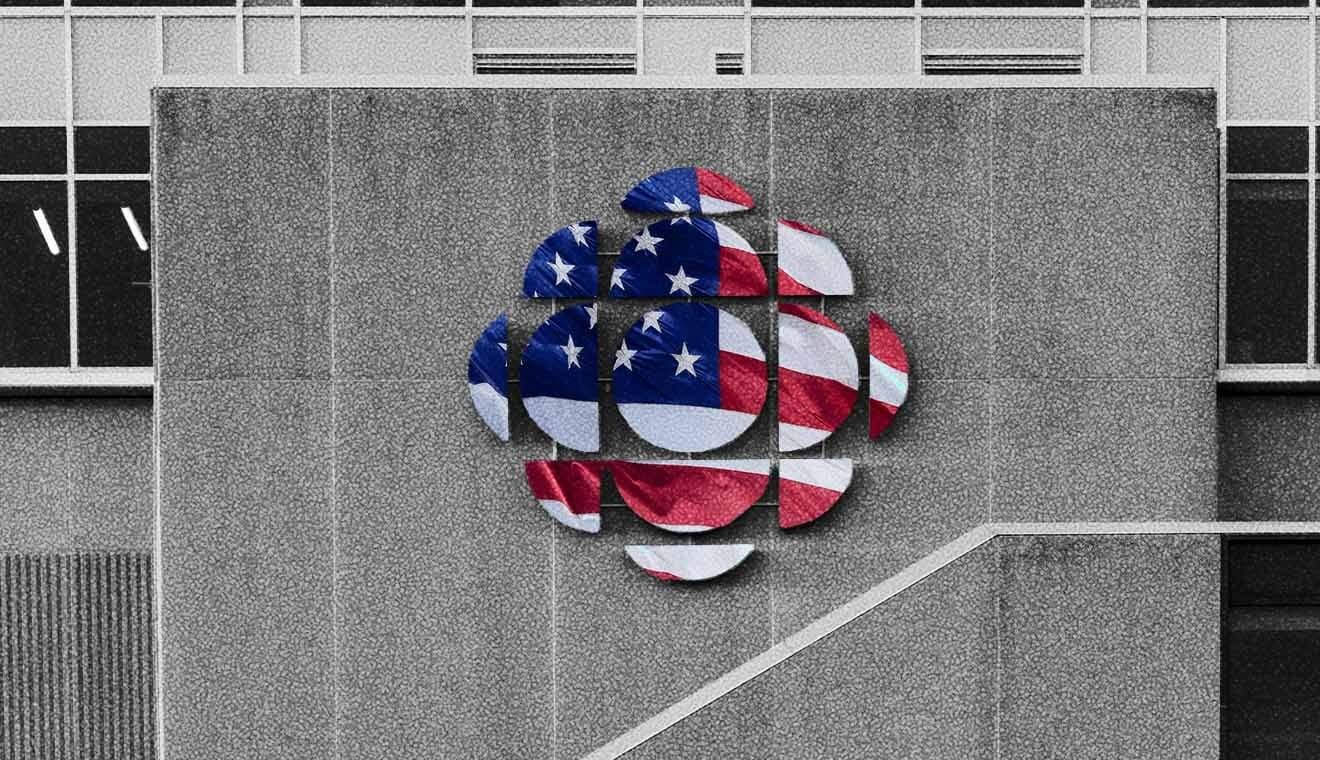
Last week, the CBC announced a style guide change that should embarrass its journalists and worry Canadians concerned about American interference.
CBC, like many other major news outlets, has had a long-standing policy of only using the word “terrorist” as a descriptor when it’s attributed to someone else, such as “governments, officials, authorities, experts and politicians.”
The publication’s internal style guide explains: “While the language is not seriously disputed in some cases, it’s less clear if not highly contested at other times — which can lead to virtually endless questions about consistency and impartiality in our coverage of various attacks around the world. Put another way: The words, themselves, can become impediments to reporting.”
It adds, “By restricting ourselves to neutral language, we aren’t faced with the problem of calling one incident a ‘terrorist act’ (e.g., the destruction of the World Trade Center) while classifying another as, say, a mere ‘bombing’ (e.g., the destruction of a crowded shopping mall in the Middle East).”
The policy has been critiqued throughout the years, but it came under particularly intense scrutiny last week.
On August 26, the Toronto Sun published an article containing a leaked excerpt of a memo from the CBC to journalists about their upcoming coverage of the 25th anniversary of Sept. 11, 2001. The memo included a reminder that they shouldn’t refer to the day’s events as a terrorist attack.
The story was picked up by media outlets throughout Canada and abroad, and CBC’s policy was critiqued by FBI director Kash Patel as well as the House Republicans on August 27, and U.S. ambassador to Canada Pete Hoekstra on August 28.
Patel claimed, “Any agency in Canada that doesn’t publicly reject this bastardization of history, and an insult to the souls lost during our largest terrorist attack in US history will no longer have friend in this FBI.” Hoekstra followed up by quote-tweeting Patel and claiming, “Just this year, FBI has been instrumental in or directly responsible for multiple disruptions of significant terrorist and violent criminal organizations operating within Canada.”
On August 28, likely prompted by these threats, Canada’s Minister of Public Safety Gary Anandasangaree issued a statement kissing American ass without directly referring to the CBC.
About 20 minutes later, CBC found there was still some cheek room left and planted a kiss of its own in the form of an editor’s blog from Basem Boshra, its senior director of journalistic standards and public trust. The post was titled, “How and why CBC News will adjust its 9/11 language guidance.”
In the post, Boshra accurately explained that the CBC’s policy is standard among major news outlets and was misrepresented by the Toronto Sun.
He noted the policy was detailed in an earlier editor’s blog and linked to it, though he didn’t re-iterate that explanation himself, which is an odd choice given how much scrutiny it was under. Surely this would have been a good time to explain the policy as clearly as possible.
Then, Boshra announced the new policy: “After reviewing our current language guidance, we have decided to adjust it to clarify that direct attribution is not required for describing the historic events of 9/11 as terrorism. [...] At the same time, as new acts of politically or ideologically motivated violence occur in our world, we will continue to follow the journalistically sound practice of attributing causes and motivations to officials and experts.”
And here’s the entirety of his explanation for the change: “We are doing so to remove what has unfortunately (and unintentionally) become an impediment to clarity and public understanding.”
I have questions about this statement.
If the existing policy is “journalistically sound,” why not keep it and do a better job of explaining it?
If the existing policy has become an “impediment to clarity and public understanding,” why not change it by outlining something entirely new and consistent?
What specific details about 9/11 make it more of a terrorist attack than other events commonly described that way?
If any such specific details exist, why not outline them explicitly if they’re being used to justify a major change in CBC policy?
If the existing policy impedes clarity and public understanding when applied to 9/11, what makes it easily understandable when applied to other attacks?
CBC doesn’t address any of these obvious questions in its statement, and I suspect it’s because they know they can’t do so in a defensible way.
But if they can’t defend a change, why make it?
The answer is likely that the new policy isn’t the result of rigorous analysis, but rather American outrage that prompted the Canadian government, upon which the CBC relies for funding, to issue a statement.
As such, the CBC either honestly believes in American exceptionalism or is willing to capitulate to the sort of threats we saw from U.S. officials if they’re made forcefully enough.
Either scenario, though they aren’t mutually exclusive, means the CBC is an organization that doesn’t truly abide by journalistic principles or serve the public that funds it.
Moreover, Canadian politicians and institutions — including Conservative Party leader Pierre Poilievre, Liberal Minister Marc Miller and CSIS — have willingly joined the campaign against the CBC to appease the very Americans they’re supposed to be rethinking their relationship with.
As a result, Canadians should also come away from this controversy more skeptical of figures in the political establishment who claim they’re concerned about U.S. meddling.
It seems American exceptionalism is here to stay.