Politicians and prominent Zionists have spent the duration of the Gaza genocide fixated on an alleged “rise in antisemitism” in Canada, and blaming it on the pro-Palestine movement.
The cast of characters doing so includes the prime minister, premiers, elected officials at all levels and the country’s largest Jewish organizations.
They’ve positioned Toronto, which has the largest Jewish community in the country, as the epicentre of this supposed trend.
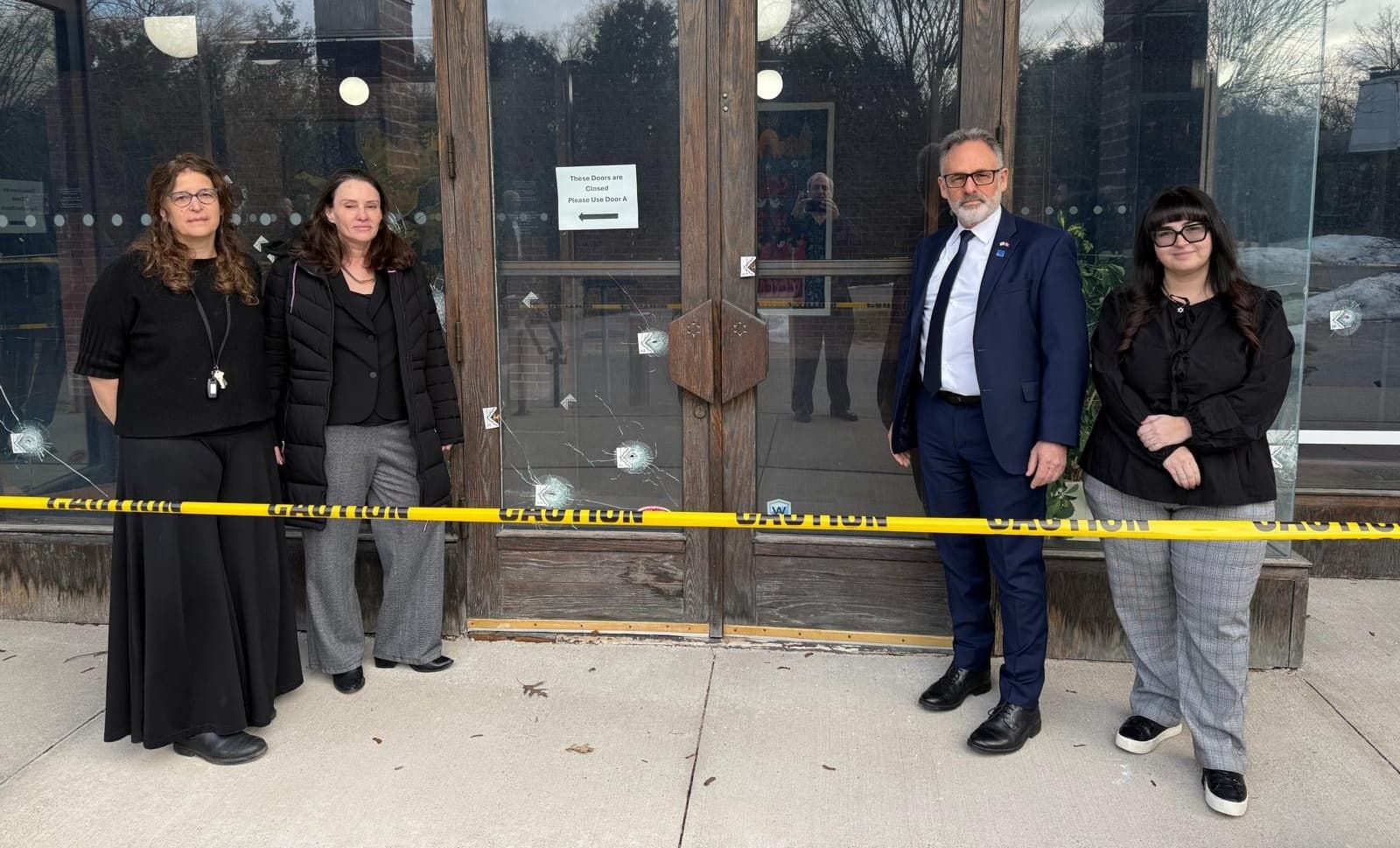
One key component of their narrative has been highlighting cases where Jewish schools and synagogues in the city were shot at. They’ve held press conferences at the scenes of the crimes, and made impassioned pleas claiming that protests against the genocide in Gaza led directly to these shootings.
They’ve then used this rhetoric to successfully push for a series of laws that civil liberty organizations have widely condemned. These laws are aimed at destroying the pro-Palestine movement, but taken together are the greatest threat to the civil liberties of all Canadians since Bill C-51 in 2015.
To make matters worse, the narrative on the shootings is bullshit.
The flaws in the narrative have been clear for a long time, but a recent event has provided concrete proof of them, such that even law enforcement is unwilling to state what other pro-Israel factions have.
Here are the facts about the shootings, how they contrast with what we’ve been told, where the false narrative came from and how exactly it has helped the passage of a serious attack on civil liberties in Canada.
Since May 2024, there have been six shootings of Jewish institutions in or near Toronto, all of which have been featured prominently in the “rising antisemitism” narrative.
The shootings took place at:
- the Bais Chaya Mushka Jewish elementary school in May, October and December 2024;
- the Temple Emanu-El synagogue on March 2, 2026;
- the Beth Avraham Yoseph of Toronto synagogue on March 6, 2026;
- the Shaarei Shomayim synagogue on March 7, 2026.
All of these shootings took place overnight or in the early morning when the institutions were closed to the public. No one was inside the buildings in five of the shootings. No one was injured in any of them.
The fact that Jewish institutions were shot at was enough to lead many elected officials to conclude that the perpetrators were motivated by antisemitism and/or the pro-Palestine movement in Canada.
Toronto Mayor Olivia Chow responded to the Temple Emanu-El shooting by calling it an “unacceptable act of antisemitism,” and claiming, “As we have seen repeatedly, incidents increase across our city as international events unfold.” The implication here seems to be that the shooter(s) took action because of Israel’s genocide in Gaza.
On the less subtle side, Ontario Premier Doug Ford, standing with Chow and then-prime minister Justin Trudeau, responded to the first Bais Chaya Mushka shooting by sending a message to the shooter(s): “You are bringing problems from everywhere else in the world, bringing it to Ontario and going after other Canadians. That’s unacceptable. I have an idea: before you plan on moving to Canada, do not come if you’re going to terrorize neighbourhoods like this.”
Ford’s comment drew criticism because he implied, with no apparent evidence, that the shooters were immigrants. Chow’s comment received little criticism despite also being based on no apparent evidence, as the establishment had accepted the shooting must have been a result of antisemitism and concern for Palestine.
Thanks in part to a recent Toronto Police Service (TPS) press conference, we now know the claim that the shooters had political or hateful motives is likely false for at least some of these shootings.
On June 16, TPS held a press conference to provide an update on the March 10 shooting of the exterior of the United States Consulate General building in downtown Toronto. Like the other shootings, this one took place when the building was closed to the public, and no one was injured.
TPS Chief Myron Demkiw and Chief. Supt. Joe Matthews told media a “criminals for hire” scheme was behind this shooting, and at least 26 others. The scheme consists of unknown individuals recruiting youth and young adults over messaging apps and paying them to conduct shootings of buildings in the Greater Toronto Area.
The named targets of these 27 shootings varied considerably, including the consulate, private residences and businesses, the latter two categories of which are allegedly linked to disputes among organized crime factions, not politics.
These shootings were allegedly conducted by a range of people, with TPS already naming and charging four, including two for the U.S. consulate shooting. Those charged thus far have been between the ages of 18 and 19. All of the 27 shootings were conducted with the same two guns, according to the police.
Demkiw made an important statement at this press conference: “What we are dealing with in this case and in other unrelated incidents, including shootings at synagogues and Jewish schools, is a recurring and similar modus operandi — criminals for hire.”
Later in the press conference, when asked directly about the connection between the shootings of Jewish institutions and the others, Matthews stated, “The commonality is the MO or the scheme, as we call it, where we do believe that the people that have committed the shootings at the Jewish schools and the synagogues are involved in a similar scheme.”
This is critical because it means TPS believes at least some of the six shootings I mentioned were actually conducted by shooters motivated by profit, not antisemitism or the pro-Palestine movement. This is bolstered by Demkiw’s response to a journalist who asked if the motivation behind the shooting of the Jewish institutions in specific was political. He replied: “As far as the shooters themselves, they are being paid for these acts.”
Demkiw didn’t specify if TPS believes all of the six shootings were done by criminals for hire, and if not, which ones were, so I got in touch with TPS and asked them.
They told me that none of the six Jewish-institution shootings are included in the 27 referenced at the press conference. They also said they have not “been formally connected” to them either at this point, which would require similarities in “forensic evidence, ballistic analysis, vehicles used, or other investigative links.”
However, they also told me that all of the Jewish-institution shootings have “similarities in modus operandi” to the 27 mentioned, namely being “guns for hire.” They added that there are also “similarities in how these offences are being carried out,” including that “buildings were targeted and no physical injuries were reported.”
During the press conference, Matthews mentioned another factor TPS has used to link the two: the shooters videotaped their acts, which was likely done to ensure they get paid for the job.
After receiving this information from TPS and rewatching the press conference, I took a closer look at the six shootings to compare them to what we now know about the “guns for hire” scheme.
There have been no suspects named in three of the shootings (Bais Chaya Mushka in May and December 2024, and Temple Emanu-El in March 2026), but they did happen at a Jewish school and a synagogue, saw buildings being targeted, and resulted in no injuries.
There have been suspects charged in the other three shootings.
Two people, aged 17 and 20 at the time of the incident, were arrested and charged for the October 2024 shooting at the Bais Chaya Mushka school. One was named, while the other wasn’t because of his age. The named suspect hasn’t been linked to the pro-Palestine movement in the nearly two years since he was arrested. In fact, once his name was released, it appears media and pro-Israel figures stopped looking into him at all. The last mention of his name I could find in the press was in December 2024. In addition, police listed the charges brought against the two, and none of them were related to hate. Instead, they were about firearms offences, possession of property obtained by crime, etc.
Two suspects were also arrested for the March 6 and 7 shootings at the Beth Avraham Yoseph of Toronto and Shaarei Shomayim synagogues, which took place just before and just after midnight. Neither suspect has been named, as both were 17 at the time of the shootings. They’re facing several charges, but none of them are related to hate. Instead, they focus on firearms offences, including trafficking.
So we know at least three of the six shootings fit the MO established by police at this point: they took place within the GTA, were conducted by youths or young adults, targeted buildings, resulted in no injuries and have led to no hate-motivated offences thus far.
To ensure the accuracy of the latter point, I asked TPS if any of the suspects charged in the past, including the two in October 2024, have since had hate crimes charges added to what they face. They told me they haven’t.
I asked why. They told me that the TPS Hate Crime Unit has been involved in the investigations because of the fact that the shootings took place at Jewish institutions. However, they added, “For hate crime charges to be laid, investigators must have evidence that establishes motivation.”
In other words, TPS has investigated the shootings as potential hate crimes because of where they happened, but have no sufficient evidence at this point establishing that the shooters were motivated by hate. Instead, they have evidence they’re willing to publicly announce pointing elsewhere: profit as motivation.
It makes sense that TPS would include the Hate Crime Unit in these investigations, at least in their early stages. This doesn’t mean the shootings were motivated by hate, and doesn’t justify politicians and pro-Israel groups jumping to the conclusions they have, and then failing to retract them. The facts point elsewhere.
It seems guaranteed that the shooters in at least some of the six incidents featured in the rising antisemitism narrative had no political or hateful motive, and it’s possible none of them do.
The story doesn’t end here, of course.
It’s concerning that anyone in the province, regardless of their motivation, is willing to shoot at schools and religious buildings. And if what TPS has stated is accurate, people are hiring youth and young adults to shoot at them. This means that somewhere along the chain there could be someone motivated by hate that put these shootings into action, even if they didn’t carry them out.
TPS said they currently don’t know who paid for these shootings, and that they’re still actively working to figure it out.
Earlier this year, an FBI special agent named someone who they believe to be linked to two incidents in Canada (as well as others in the U.S. and Europe): Mohammad Baqer Saad Dawood al-Saadi, an alleged member of the Iraqi resistance group Kata’ib Hezbollah.
The agent claimed in a criminal complaint against al-Saadi that during an intercepted March 20 call he “confirmed that ‘our people’ were also behind two attacks in Canada against ‘the consulate and the Knesset,’ the first of which I believe refers to a March 10, 2026 shooting at the U.S. consulate in Toronto, Canada, and the second of which I believe refers to an attack on a synagogue.” The agent doesn’t state why he believes the Knesset mention is a reference to a synagogue, nor does he state the attack was a shooting or even in Toronto.
The agent alleges that al-Saadi acted in an attempt to “compel the United States to stop military attacks against Iran and the Islamic Revolutionary Guard Corp,” which began on February 28. This could explain the U.S. consulate shooting, if he orchestrated it (though this can’t be categorized as an antisemitic attack), but it’s unclear how it would motivate shooting a Toronto synagogue. Moreover, it couldn’t apply as a rationale for the shootings of the Jewish school, as all three incidents took place before the round of U.S. bombing in question began.
No evidence has been put forward to link al-Saadi to any of the Toronto shootings beyond this allegedly intercepted phone call. The RCMP, who were also at the June TPS press conference, were asked directly about him, and said they’re aware of the reports but have yet to discover who’s responsible for contracting out the shootings. As such, there’s no public evidence to suggest al-Saadi is responsible at this point.
Regardless of who ends up being found to have contracted these shootings, the fact that the shooters themselves likely weren’t motivated by antisemitism or pro-Palestine sentiment is significant.
The narrative has portrayed these incidents as being perpetrated by people radicalized by Palestine protests that have taken place across the country since the start of the Gaza genocide, in the way that the Quebec City mosque shooter, who killed six Muslims and injured five others, was radicalized by Islamophobic and white supremacist content online. This framing is used to attack the pro-Palestine movement as a whole as a hate movement, and allege that it’s responsible for Jewish institutions being shot at.
The facts, however, show that far from being radicalized by protests against genocide, at least some of the shooters were criminals for hire with no political or hateful motive, and no connection to the pro-Palestine movement of any sort.
This doesn’t change the fact that Jewish institutions were shot at. But it does undermine the narrative that has been used to pass new laws targeting the pro-Palestine movement and restricting the civil liberties of Canadians in general.
This narrative began with Canada’s major Jewish organizations, which politicians are always eager to appease.
In May 2024, B’nai Brith Canada responded to the shooting of a school that month by claiming, “This incident is a stark reminder of the dangers created by a permissive environment that tolerates hate-preaching encampments, hate speech and related antisemitism which threaten the very fabric of our Canadian society.”
In December 2024, Noah Shack, then the interim president of the Centre for Israel and Jewish Affairs (CIJA) and now its CEO, claimed “extremism in our streets” incited the shooting of a school that month, and that additional police funding was needed to end it.
In March 2026, after the three shootings of synagogues that month, UJA chief development officer Sara Lefton pointed to the annual Al-Quds Day protest, and called on leaders to ensure it is “shut down, and is not allowed to take place in Toronto, or anywhere in this country, because hateful words, hateful demonstrations turn into this kind of violent attack, and we need to end it now.”
Shack also directly referenced pro-Palestine protests since Oct. 7, 2023, and said, “They moved into our neighbourhoods, they began targeting our synagogues, our schools, our community centres. And now we’re confronted with shots fired at three synagogues.”
Both Shack and Lefton’s statements were made during a press conference in front of one of the synagogues.
This narrative has been picked up by politicians and successfully used to push for the sort of measures described above.
For example, several politicians spoke in front of a rally in support of the Jewish elementary school that was shot at in May 2024. The Canadian Jewish News reported, “Toronto city councillors James Pasternak and Brad Bradford spoke about their efforts to request the province to establish ‘bubble zones’ that would keep political protests at a distance from faith-based institutions. The motion failed to pass at a council meeting last week. ‘We’re not finished asking for bubble zones in front of our vulnerable institutions. To those who thought this debate was over, we’ll be back,’ Pasternak told the crowd to cheers.”
In May 2025, Toronto city council passed a bubble zone protest bylaw. There are now at least 46 bubble zones in the city. The Canadian Civil Liberties Association called the bylaw a “significant risk to peaceful expression and assembly” that is “not necessary in light of the already-existing police powers.” They urged Toronto city councillors to vote against the bylaw. CIJA, meanwhile, called on them to vote for it, and applauded when it passed.
It’s unclear how a bubble zone protest bylaw would have stopped a contracted criminal with illegal weapons from shooting at a school.
In September 2025, the federal government introduced Bill C-9, which contains a range of proposed changes to the Criminal Code that have been called for by Jewish groups.
In October 2025, 37 civil society organizations released a joint letter opposing the bill, stating it will create “new criminal laws that risk serious and unjustified infringements on Charter-protected fundamental freedoms, including the criminalization of peaceful protest.” In January 2026, five major Jewish organizations, including B’nai Brith Canada, CIJA and the Friends of Simon Wiesenthal Center, released a statement in support of strengthening the bill. B’nai Brith’s CEO stated, “As lawmakers return to Parliament next week, it is vital for the security of all Canadians, including Jewish Canadians, that a strong Bill C-9 be prioritized and enacted without delay.”
On March 25, the bill was adopted by Parliament in a 186-137 vote, a major step toward becoming law. Several Jewish organizations issued a joint statement that day celebrating the news and pushing for even more.
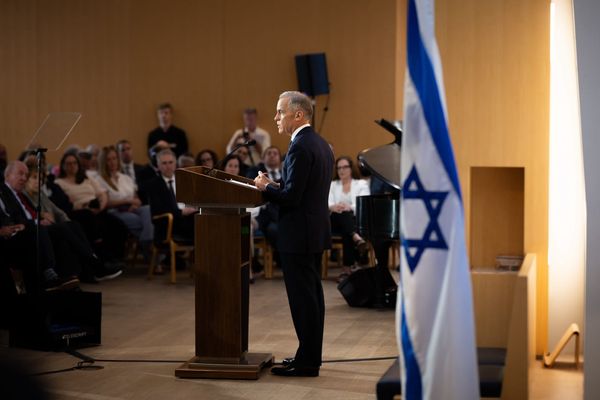
On June 1, Prime Minister Mark Carney said in a speech at a Toronto synagogue that Bill C-9 “addresses directly the rise in antisemitism, hate-motivated violence, and the targeting of communities.” One example he gave was, “Antisemites in Canada have fired bullets at Jewish schools.”
The bill received Royal Assent on June 18, and is now law.
Finally, at least one senior Liberal MP directly referenced the shootings to call for the passage of Bill C-22, which a coalition of civil liberty groups has said “raises significant privacy and security concerns,” including backdooring of devices that would make encryption useless.
On June 17, Liberal MP Ruby Sahota told the House of Commons in a comment pushing for the urgent passing of the bill: “Every day that we wait, more and more victims are created in Canada. Take, for example, the shootings at the synagogues that have just happened recently. Those shooters were paid and hired by a foreign entity, in our country, online. Had we been able to find those shooters sooner, there would have been fewer victims.” (Sahota didn’t name the foreign entity, and failed to state what evidence she has for this claim.)
The bill passed its third reading in the House of Commons on June 18, and is on its way to becoming law.
These are just a few examples where, in my view, the narrative advanced about the shootings at synagogues and schools by some of Canada’s largest Jewish organizations was misleading, and was subsequently relied on by politicians to push for and/or justify new laws
Civil liberty groups have condemned these laws en masse, claiming they will limit the freedoms of all Canadians, especially those protesting against a genocide the Canadian government has helped make possible.
It’s possible these measures would have been enacted without the shootings and the subsequent narrative about them that was spread, but they’ve undoubtedly helped get them into law.
These changes will have disastrous impacts on Canadian liberties for years to come, including handicapping a movement attempting to stop the worst crime of the 21st century. But the latter point is exactly what pro-Israel organizations want.
I don’t think anyone has benefited from the narrative on these shootings more than Zionists.