
On February 28, Prime Minister Mark Carney issued a statement expressing support for the joint United States-Israeli attack on Iran, characterizing the states’ illegal strikes as “acting to prevent Iran from obtaining a nuclear weapon.”
This sort of rhetoric has a history in Canada. For decades, Canadian politicians and media outlets have pointed to alleged nuclear development in Iran to call for military action and/or sanctions against its population. The threat of Iranian nukes has never materialized; the military strikes and sanctions have, killing thousands in the country directly and contributing to the impoverishment of millions of others.
The Maple has reviewed 25 years of media commentary on Iran’s alleged nuclear weapons and found a consistent pattern of writers and editorial boards claiming Iran is mere weeks, months or years away from obtaining them. These claims have not aged well, and yet, the media class persists with the fearmongering.
Here’s a sample of this media coverage, with at least one example pulled for each year from 2001 to 2026. These articles were found by searching through the Canadian Newsstream database. A relevant quote, as well as the title, date and place of publication, and author(s), were included for each article.
2001
“We have to face facts: Sometime in the next few years, ceteris paribus, either Iran or Iraq is going to gatecrash the Nuclear Club. The addition of just one openly acknowledged atomic bomb will transform the strategic geography and military balance of the Middle East.” - “Chasing nukes in the Middle East,” by Alexander Rose in the National Post on March 5.
2002
“Iran is said to be about three years away from having nuclear weapons and although its political leaders are moderates, the religious leaders who actually run things are not. [...] Waiting for weapons of mass destruction to be deployed before taking action would be morally indefensible. Canada must help neutralize these threats now, before they are used to kill again.” - “Iraq factor; Canada must support U.S.,” by the Windsor Star editorial board on February 20.
2003
“We must do whatever it takes to deny Tehran the bomb. The latest edition of The Bulletin of Atomic Scientists includes an article that opens: ‘Iran has been secretly developing the capability to make nuclear weapons,’ and concludes that Iran ‘could have a nuclear weapon by the end of 2005.’ Such chilling statements demonstrate that concern about Iran’s nuclear program is well-justified, and not a scare tactic by the Bush administration. Iran’s nuclear program, along with North Korea’s, is the greatest security threat facing the western world and must be confronted.” - “Keep Iran nuclear-free,” by the Ottawa Citizen editorial board on October 6.
“Iran is not ending its nuclear program; at best, it is merely suspending it. And given the advanced state of the country’s research and development, it seems likely that, barring war or some other extraordinary event, the country will probably acquire a nuclear weapon during the next decade.” - “Stalling Iran’s nukes,” by the National Post editorial board on October 23.
2004
“By most accounts, Iran is only a few years away from getting The Bomb. And so this week’s [International Atomic Energy Agency] board of governors meeting may be one of the last chances the world has to stop the project through peaceful means. If the Europeans are too scared to take on Tehran now, God help us when a Persian nuclear threat hangs over Paris, London and Berlin.” - “Standing up to Iran,” by the National Post editorial board on March 12.
2005
“Israeli intelligence estimates that Iran will be able to enrich uranium by February or March 2006. The country would still be several years from having the bomb, but there would be no turning back the technological clock.” - “The lame response to Iran’s nuclear aspirations is a ticking time bomb,” by the Vancouver Sun editorial board on December 20.
2006
“Iran is some years away from possessing the ability to produce nuclear weapons. The international community needs to use this gift of time wisely and effectively to avoid what could be one of the most dangerous crises of the early 21st century.” - “Confronting Tehran,” by the Toronto Star editorial board on January 16.
2007
“Tehran’s nuclear efforts are troubling, particularly under President Mahmoud Ahmadinejad, and should be closely monitored, if only because the estimate says Iran will probably still have the capability to arm a missile with a nuclear warhead by the middle of the next decade. But sanctions and a ratcheting down of the overheated rhetoric seem to be having some effects.” - “Report should leash the dogs of war,” by the Montreal Gazette editorial board on December 5.
2008
“We believe the only acceptable end state is the complete cessation of enrichment activities inside Iran. We foresee no combination of international inspections or co-ownership of enrichment facilities that would provide sufficient assurances that Iran is not producing weapons-grade fissile material. Indeed, the enrichment facility at Natanz is already technically capable — once Iran has a sufficient stockpile of low-enriched uranium — of producing enough highly enriched uranium for a nuclear device in four weeks. [...] It is crucial that, immediately after the U.S. presidential election day on Nov. 4 that Congress and the president-elect begin to work on the exceedingly difficult policy measures that will be required if the United States is to prevent Iran from obtaining nuclear weapons capability. Time may be shorter than many imagine, and failure could carry a catastrophic cost to the national interest.” - “Steps must be taken to prevent a nuclear Iran,” by Daniel R. Coats and Charles S. Robb in the Guelph Mercury on October 24.
2009
“There is broad consensus that Iran’s attainment of nuclear capability is inevitable. [...] Given the eschatological and revolutionary calculus that informs Iranian policy; its spotless record of ideologically based malevolence; its public offer to share its nuclear technology; its sponsorship of the Syrian nuclear program; and the proclamations of Iranian officials and leaders regarding the plausible use of nuclear weapons, the destruction of other countries and the need ‘to wipe Anglo-Saxon culture off the face of the Earth,’ the threat of a nuclear incident instigated by Iran or by one of its terrorist proxies must not be dismissed as mere hyperbole.” - “Intercede now,” by Danny Eisen in the National Post on September 25.
“The clerics are thought to be only a few years away from possession of a functioning nuclear weapon. Although many nations have strenuously objected to their megalomaniacal designs, threats, sanctions and the promise of still more sanctions have utterly failed to sway the ayatollahs from their dangerous pursuits. [...] If this latest round of talks fails, western nations can’t hope another round of tired threats and promises will deter Iran from its ambitions. At that point, there will be little choice but to take Iranian President Mahmoud Ahmadinejad’s hellfire rhetoric and talk of martyrdom at face value. Launching a strategic strike on the new nuclear facility to pre-empt nuclear war is the final option and may become necessary if Israel is to avoid annihilation in a blinding flash.” - “Avoiding nuclear Armageddon,” by the Calgary Herald editorial board on October 4.
2010
“Israel knows that the window for stopping Iran’s pursuit of nuclear weapons is quickly closing. Action must be taken soon to prevent Iran’s manic leaders from obtaining the world’s most lethal weapon to achieve their goal of ‘wiping Israel off the map.’ Tragically, the international community appears feckless in stopping Iran — even with widespread protests against an increasingly hated Iranian regime and growing unity in the Iranian opposition movement. As one of Israel’s few remaining vocal allies, Canada must support Israel. Prime Minister Stephen Harper has stated an ‘attack on Israel is attack on Canada.’ If Israel follows its historic precedent and conducts unilateral military strikes against Iran’s nuclear facilities, Harper must stand up for Israel’s right to self-defence against the world’s most dangerous regime and largest state sponsor of terrorism – the Islamic Republic of Iran.” - “Israel’s pre-emptive nuclear precedent,” by Robert D. Onley in the Windsor Star on March 5.
“This year’s anniversary of 9/11 took place in the shadow of the Ground Zero mosque. Next year’s may take place in the shadow of a nuclear enabled Iran. According to estimates by the Pentagon and others, Iran is within a year of crossing a critical nuclear threshold. If so, it will mark the failure of the West to address what is arguably the most serious challenge from the Islamist world since a gaping pit replaced the World Trade Center on New York’s skyline.” - “Only crippling sanctions will send a message to Iran,” by Danny Eisen in the Ottawa Citizen on September 21.
2011
“The prospect of Iran being armed with the ultimate weapon is a true nightmare. In June, the International Atomic Energy Agency (IAEA) declared that Iran is ‘producing uranium metal into components relevant to a nuclear device,’ and is building a ‘missile re-entry vehicle’ designed ‘for a new payload assessed as being nuclear in nature.’ Many other nations have nukes, of course, including Israel. But Iran is a different case: Its leadership is not only steeped in poisonous anti-Western hatred, but also in Shiite eschatological fantasies that negate the presumption of self-preservation, the very basis of the military doctrine of deterrence. Put another way, the mad mullahs could see their own annihilation as a price worth paying if they can take down Israel and a few million Americans with it.” - “State of evil; An alleged bomb plot highlights the despicable nature of Iran’s government,” by the National Post editorial board on October 13.
2012
“U.S. President Barack Obama does not want Israel to ‘destabilize’ the Mideast by attacking Iran’s nuclear facilities. But how much worse would be the destabilization if Iran had nuclear weapons? [...] Israel must act now. The task is very difficult. Iran is a large country, and its nuclear facilities are scattered in many locations. The distances to be covered are long and over unfriendly territories. But the alternative, inaction, exposes Israel to destruction. And Iran’s attacks on the West in general will not be far behind. After the holocaust of the Second World War, Jews everywhere pledged ‘never again.’ That time is coming. What is Israel waiting for?” - “Israel can’t delay taking action against Iran,” by Stanley Taube in the Calgary Herald on April 1.
2013
“Terrible as the 9/11/01 and 4/15/13 attacks were, imagine a world in which jihadists have nuclear weapons. Iran is likely to achieve ‘critical capacity’ in about a year unless serious actions are taken — presumably by the U.S. or Israel — to prevent it. Would the Iranians ever give nuclear devices to such terrorist groups as Hezbollah and Hamas? Of course. Why not? It is no simple matter to construct defence strategies that can defeat those who believe their mission — mass murder — is divinely ordained and endorsed. But that is what must be done. A few critical components of such a strategy need to be recognized at the outset: [...] Iran’s theocrats believe they are waging a global revolution, and regard nuclear weapons as essential to the outcome. The world’s leading sponsors of terrorism, they also brutally oppress their own citizens - which should indicate what they will do to you and me, given a chance. If economic pressure and diplomacy continue to fail, more draconian measures must follow.” - “Know your enemy,” by Clifford D. May in the National Post on April 29.
2014
“The broad thrust of the proposed settlement is nothing new: Iran agrees to reduce its uranium enrichment capacity such that its ‘breakout time’ — how quickly it could produce the material needed for a nuclear weapon if it made a full-throttled effort to do so — is extended from roughly two months at present to nine months (midpoint of the six-to-twelve month range suggested by Secretary of State John Kerry in congressional testimony last month).” - “A sweet deal for the mullahs; Be afraid of the looming Iran nuclear agreement. Be very afraid,” by Gary Gambill in the National Post on May 13.
2015
“The expected deal will be one of the most important international agreements of the past 50 years. Depending which side you believe, it will either guarantee that Iran will finally give up any dreams it may have about becoming a nuclear weapons state, or conversely, it will ultimately lead to a nuclear-armed Iran, if not in the next few years then in the medium to longer term. Having carefully followed this process since the interim agreement was announced in November 2013, I am firmly in the latter camp.” - “A good deal for Tehran,” by Andrew Richter in the National Post on February 23.
“For sure, Tehran is a hostile, anti-Israeli, terror-exporting regime. As things stand today, an unfettered Iran could build a bomb within a few months without the world knowing. That is a scary thought. [...] Critically, the deal put forward by the key United Nations Security Council players would constrain Iran’s ability to ‘break out’ from the agreement by quickly enriching enough fuel to build a bomb before the world can react. Inspectors would ‘verifiably’ ensure that Iran remains at least 12 months away from that point, substantially longer than the current estimate of two to three months.” - “Netanyahu’s hollow pitch,” by the Toronto Star editorial board on March 4.
2016
“And Iran, no matter what world leaders say, likely will have the potential to unleash a nuclear weapon. Their deranged leaders have stated publicly for years of their intent to ‘wipe Israel off the map.’ Take a look at the world around us on any given day. How many of these war torn, corrupt, and dictatorial countries are embracing Judeo-Christian principles? How many are worshipping the one true, resurrected and living God? The answer is — none.” - “Judeo-Christian values need to be reaffirmed,” by Warren Lemon in the Timmins Daily Press on March 16.
2017
“On one hand, we are properly worried over Syria and North Korea. On the other hand, our current policy toward Iran, a much greater threat, is such that we are helping to rebuild and enrich a country that is supporting Assad, is exporting terrorism, is fomenting regional chaos and — even without cheating — can eventually obtain nuclear weapons. We are concerned about North Korea’s puny and inept ballistic missile program but have done nothing since pinprick sanctions to respond to Iran’s illegal missile tests. We have lots of challenges to address, to be sure, but we shouldn't take our eyes off of the worst and most dangerous rogue state.” - “Washington drops the ball,” by Jennifer Rubin in the National Post on April 21.
2018
“Even if Iran abides by the terms imposed upon it by the [Joint Comprehensive Plan of Action] it will be in a position to ‘break out’ as a full nuclear power within months of the expiry of the agreement, which happens less than a decade from now.” - “Iran’s missiles can’t pierce PM’s naiveté,” by Vivian Bercovici in the National Post on May 11.
2019
“Shortly after the revolution, Iraq started a war with Iran that ground on for eight bloody and painful years and ended in a stalemate. Iran has withstood isolation, massive student protests in 1999, and an uprising in 2017. Now it has spread its influence to several other states, including Lebanon and Yemen. Lately it’s been showing signs of planning a future adventure in Syria. And it is somewhere close to nuclear capability.” - “The strange success of theocratic Iran,” by Robert Fulford in the National Post on February 9.
2020
“Only a Trump victory will prevent Iran from becoming a nuclear military power within five years and North Korea from resuming its missile tests over Japan and South Korea.” - “Best man for the job; Trump may be a quasi-vulgarian but he’s also a very effective executive,” by Conrad Black in the National Post on October 31.
2021
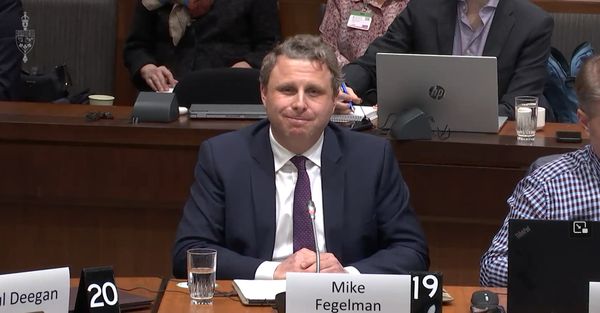
“True to his election promise, U.S. President Joe Biden has reportedly undertaken efforts to rejoin the Iranian nuclear deal, with Secretary of State Antony Blinken warning that Iran could procure enough fissile material to build a nuclear weapon within weeks.” - “Iranian nuclear deal was never going to work,” by Mike Fegelman in the National Post on February 8.
2022
“There are numerous obstacles, however, that stand in the way of a new agreement, not least of which is the fact that Iran currently views itself as having the stronger hand, as it may be just months away from having the capability to produce a crude nuclear weapon. Furthermore, Tehran has almost certainly concluded that there is no credible risk of military action on the part of the United States, which has given it more confidence in taking an aggressive negotiating posture in Vienna.” - “Nuclear standoff coming to a head,” by Andrew Richter in the National Post on January 17.
2023
“On Feb. 28, a senior U.S. Defence Department official warned that ‘Iran’s nuclear progress since we left the JCPOA has been remarkable. Back in 2018, when the (Trump) administration decided to leave the JCPOA, it would have taken Iran about 12 months to produce one bomb’s worth of fissile material. Now it would take about 12 days.’” - “Iran a wild card that needs to be watched,” by Ian Bremmer in the National Post on March 27.
2024
“Finally, even if the Israeli response to the Iranian attack is measured, the clerics of Tehran almost certainly will accelerate their nuclear weapon breakout time — the time required to produce material for a nuclear weapon — which according to U.S. Secretary of State Antony Blinken was down to one or two weeks in July. An Iranian nuclear weapon ends the chance for stability in the Middle East and serves as an existential threat to Israel, Saudi Arabia and the United Arab Emirates.” - “With Sinwar dead, is there hope the bloodshed could end in the Middle East?” by R. David Harden in The Globe and Mail on October 18.
2025
“Now, with Iran on the verge of the point of nuclear no return, equivocation is not an option. In moving to eliminate the Iranian threat, Israel was not acting alone, but in defence of the West. And it is doing what much of the world has lacked the will to do: confront a genocidal regime before it is too late.” - “Israel just did the West a favour,” by Arsen Ostrovsky in the National Post on June 14.
“But the week of attacks by Israel and the United States have not changed anything significantly. Iran’s authoritarian regime, should it decide to develop a nuclear weapon, could still reportedly do so within months, and no plausible amount of bombing or assassination was ever going to change that more than marginally.” - “What was the point of the conflict in Iran? To keep three men in power,” by Doug Saunders in The Globe and Mail on June 25.
2026
“We stand today at a critical juncture where Iran’s past behaviour cannot dictate future outcomes. All previous negotiations with Iran have failed. Iran continues to threaten the security of the Middle East, America and Israel. In June, by attacking Israeli civilian centres with ballistic missiles, it demonstrated its missile program is a real and viable threat. By callously mass murdering its own people, it demonstrated its deranged extremism that threatens the world. Iran must not only be defanged of its nuclear and ballistic missile programs. Its Supreme Leader, Ayatollah Ali Khamenei, must be dethroned as well. The time is now.” - “‘Handing Iran a noose to hang’ itself: Limited strikes possible, Trump says,” by Avi Benlolo in the National Post on February 21.
“Iran cannot fund international terror, attack Israel for decades through proxies, pursue nuclear weapons and back a war of aggression in Ukraine and then expect that the niceties of international law will somehow shield it from the consequences of its actions.” - “Iran is a new front in the fight against the authoritarian bloc,” by The Globe and Mail editorial board on March 2.