
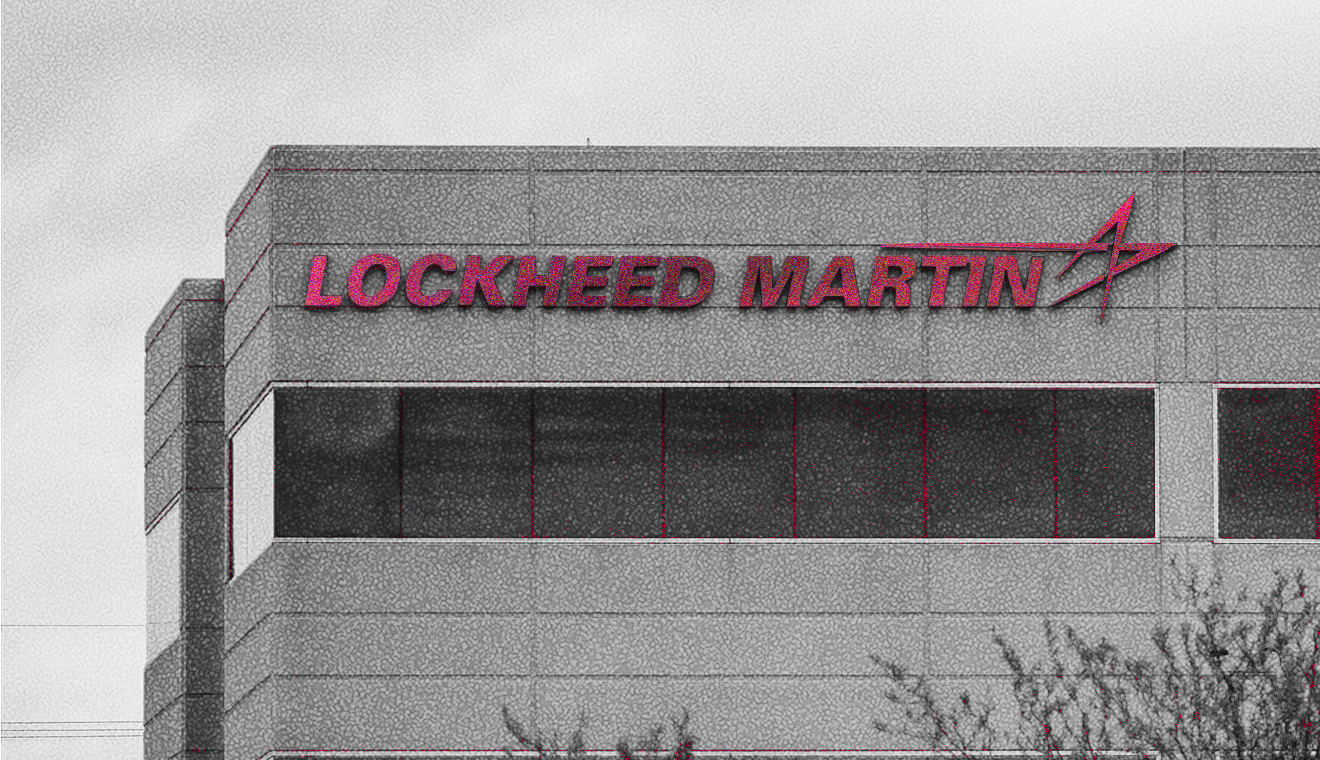
As the U.S. and Israel ramp up their war against Iran, American weapons company Lockheed Martin announced it plans to “quadruple” critical munitions production at the behest of United States President Donald Trump.
The announcement comes as Canada continues to review plans to purchase 88 F-35 fighter jets from Lockheed Martin for an acquisition cost of $27.7 billion, a deal that a majority of Canadians wanted to scrap before the launch of the American-Israeli war on Iran.
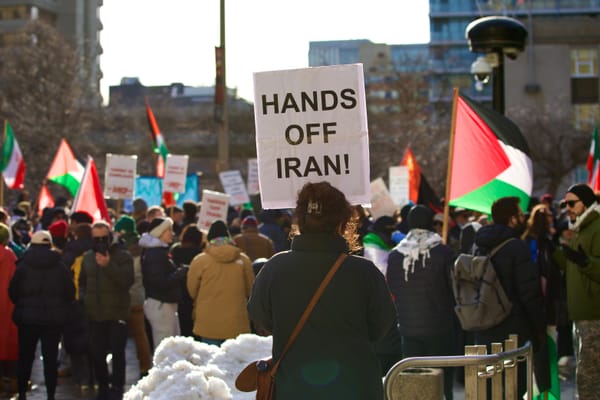
Nearly half of Canadians oppose this war, dubbed “Operation Epic Fury,” compared with just over one-third who support it, according to a recent Angus Reid poll.
On Friday evening, Lockheed Martin announced: “We have agreed to quadruple critical munitions production. As a result of [Trump’s] leadership, we began this work months ago with [Secretary of War Pete] Hegseth and Deputy Secretary [Steve] Feinberg.”
The statement came following a Truth Social post from Trump, who said he had met with representatives from seven major American arms companies.
“They have agreed to quadruple Production of the ‘Exquisite Class’ Weaponry in that we want to reach, as rapidly as possible, the highest levels of quantity. Expansion began three months prior to the meeting, and Plants and Production of many of these Weapons are already under way,” Trump wrote.
“We have a virtually unlimited supply of Medium and Upper Medium Grade Munitions, which we are using, as an example, in Iran, and recently used in Venezuela.”
Prime Minister Mark Carney announced the review of the F-35 deal in March 2025 following Trump’s threats to turn Canada into the “51st state” and the U.S. president’s decision to launch a trade war.
In a Nanos poll published in February, 55 per cent of Canadians said they consider the U.S. to be the biggest threat to the security of Canada right now, compared to just 2 per cent who said they consider Iran to be the biggest threat.
Lockheed Martin is the U.S.’ largest arms manufacturer, and plays a central role in supplying the American military, including in its current attacks on Iran.
Notably, the U.S. military has showcased its use of “Precision Strike Missiles (PrSM)” made by Lockheed Martin in its war on Iran. In a propaganda video released on March 4, U.S. Central Command showed footage of PrSM launches from Lockheed Martin-made HIMARS launchers.
In a post featuring the video, U.S. Central Command said: “In a historic first, long-range Precision Strike Missiles (PrSMs) were used in combat during Operation Epic Fury, providing an unrivaled deep strike capability.”
Lockheed Martin’s official X/Twitter account re-posted the video.
Last October, the U.S. State Department authorized Canada to buy 26 HIMARS launchers and related equipment for $2.4 billion.
Both the United States and Israel have also deployed F-35s, which contain Canadian-made components, in their operations against Iran.
The Maple emailed Lockheed Martin asking if it is concerned about whether its role in supplying weapons for the war on Iran could further erode public support in Canada for the F-35 contract. No response was received by publication time.
Canada had already paid for 16 F-35s when the decision to review the contract was announced, and despite the ongoing review, the Carney government quietly put down funds to buy an additional 14 jets in February.
Several concerns have been raised by critics of the F-35 deal. Notably, the U.S. will have full control over upgrades and software updates necessary to keep Canada’s F-35s operational, the Ottawa Citizen reported last year.
As well, spare parts for F-35s are owned by the U.S. until the moment they’re installed, meaning any spare parts in Canada could be seized by the U.S.
A spokesperson for Lockheed Martin told The Maple in February that as part of the company’s contracts with foreign governments that buy F-35s, all necessary data and infrastructure are delivered.
Despite these concerns about the F-35, proponents of the contract have featured more prominently in reporting by some of Canada’s largest news outlets than voices who oppose it or favour a deal with Saab, Lockheed Martin’s main competitor, recent analysis by The Maple found.
Carney, meanwhile, has struggled to articulate a coherent position in response to the war on Iran. The prime minister has said Canada supported the strikes with “regret,” and has refused to rule out Canadian military participation in the campaign.
The U.S. and Israel have bombed at least four schools in Iran since launching the attacks on February 28. On the first day of the campaign, the U.S. hit an elementary school with a Tomahawk missile, killing at least 186 people, the vast majority of whom were children aged between seven and 12.


.jpg)