

Sex workers in Montreal are on strike.
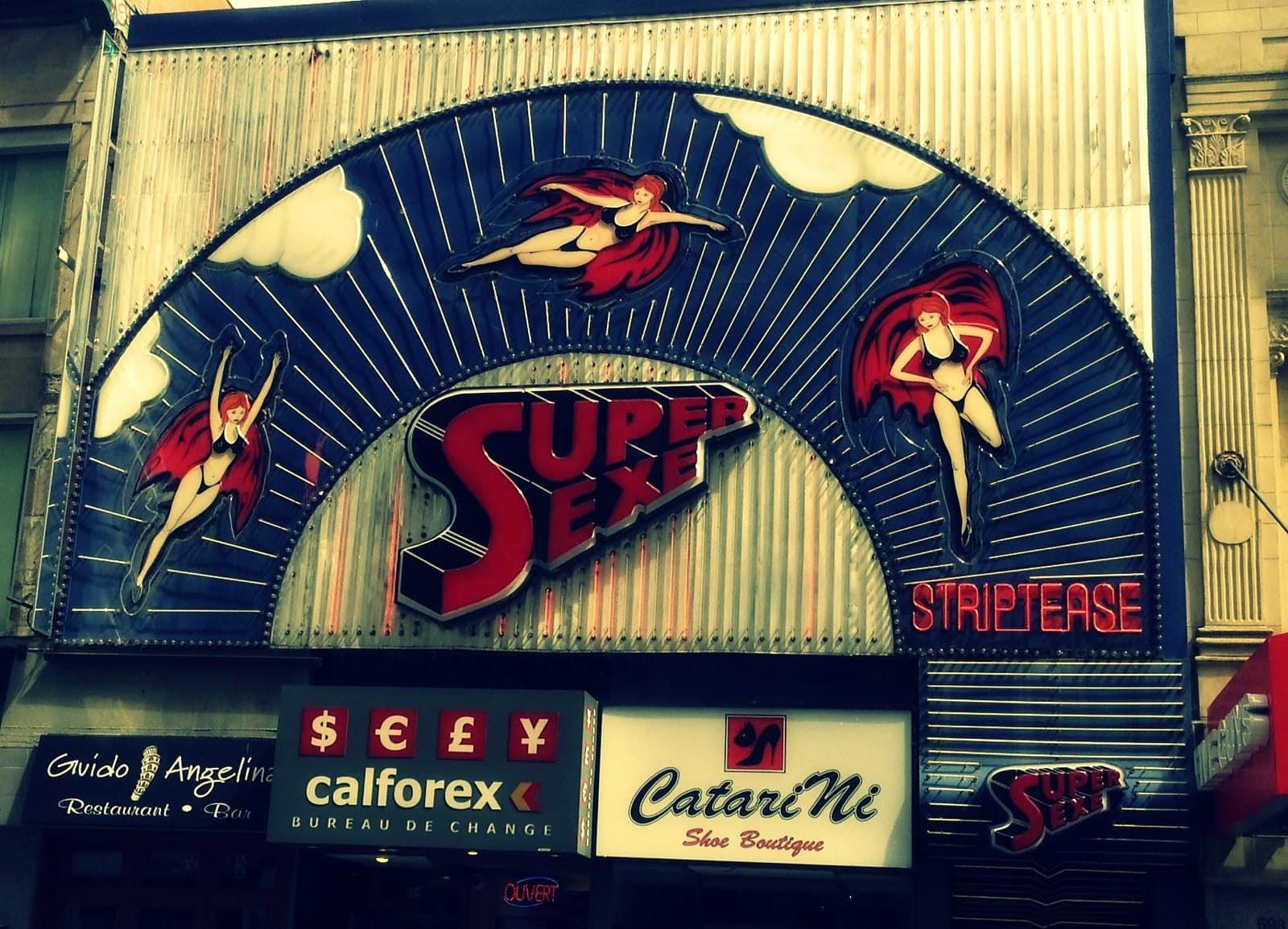
As tourists pour into the city for the busy Formula 1 Grand Prix weekend, workers at strip clubs and massage parlours are seizing the moment to push back against bad bosses and unsafe working conditions.
The one-day strike was called by the Sex Work Autonomous Committee (SWAC, or CATS in French), a voluntary worker organization that has been organizing sex workers in Montreal since 2019.
Workers are rallying behind several key demands.
First, strikers want an end to the ‘bar fees’ that strip clubs charge workers. Clubs frequently require dancers to pay anywhere between $15 and $100 to work. As workers explained to CBC, fees are often raised during busy times like the Grand Prix, even though working these days isn’t necessarily more lucrative for dancers.
“The bar fee is seen by many dancers as a symbol of freedom. You pay to work, and in exchange, you’re the master of your own schedule. But this is becoming less and less true–if it ever was,” SWAC writes on its website.
Instead, SWAC says, growing employer stipulations constrain worker autonomy and raise doubts about dancers’ supposed independence. “The bar fee model benefits only the bosses,” they conclude. In response, SWAC is calling for a return to hourly wages and fair compensation.
Relatedly, the striking workers want to be classified as employees. In many respects, lack of employment status is at the root of workers’ grievances. As SWAC explains, “The first step is to break free from the idea that we are self-employed. The truth is that we have an employer and he owes us safe working conditions like in any other jobs!”
In Canada and Quebec, employee status is the gateway to virtually all workplace protections. As independent contractors, strippers, massage parlour workers and escorts are not covered by employment standards or workplace health and safety rules and are not entitled to other social benefits like Employment Insurance. In practice, this can mean earning income below the minimum wage, working excessively long hours or being terminated arbitrarily with no income to fall back on.
Mia Arca, a sex worker and member of SWAC, told Class Struggle that the fight for employment status is about recognizing the real conditions of sex work.
“There’s this whole neoliberal thing about ‘the boss girl,’ about being your own CEO, and we do not believe in that. For decades, we’ve been classified as ‘autonomous’ but we don’t believe we are autonomous or independent,” Arca said.
“If we read the law [...] we do not qualify as autonomous. Like, for me, I work in a massage parlour. An independent worker would bring their own tools to work. Of course, I don’t bring my own massage table. I’m not bringing my own oil. I’m not making the schedule. My boss gives it to me every week. They provide the tools. They provide the clients. To me, it’s 100 per cent clear,” she said.
According to Arca, a lack of wage regulations also translates into unpaid work. “When you’re not with a client, you’re cleaning the place. There’s no maid or anything. So I’m working for the employer without being paid.”
Perhaps most critically, gaining employment status would mean workers can hold employers responsible for their health and safety.
Whether in massage parlours or in strip clubs, sex workers confront a range of health and safety risks, including musculoskeletal injuries, falls, and other physical hazards, and of course workplace violence.
As Arca explained, “We are exposed to sexual violence because we are naked with men. Right now, we are not protected by any law. The burden of providing health and safety should be with the employer.”
Lacking employee status or legal recourse against employers, workers are essentially on their own when confronted with violent or aggressive customers.
As Shawna Ferris, professor of Women’s and Gender Studies at the University of Manitoba and co-editor of Sex Work Activism in Canada, told Class Struggle, because employers are not held responsible, sex workers frequently take matters into their own hands. “Sex workers basically provide labour protections to each other. We see them doing it all the time, often informally,” she said.
But winning employment status requires destigmatizing sex work. Keeping sex workers in the shadows contributes to the industry’s poor regulation, including its lack of labour protections. This is why SWAC is also calling for decriminalization.
“Whenever people talk about sex work, they want to talk about the sex part but not the work part,” Arca told Class Struggle.
“For us, this is just like any other job. It’s a job and we are workers. We are all in this capitalist, liberal economy. We’re exploited by this system and by our bosses. But it’s not sexual exploitation; it’s labour exploitation just like any other workers,” she said.
As Ferris further explained, sex workers’ concerns resemble those of many other workers who labour in “touch-based professions,” such as registered massage therapists or hairdressers.
“What we’re talking about are workers who need protections at work. The issue is that we treat the sex part as though it makes the work part different. It’s an ideological position that makes people blind to the fact that, whether or not you think the work should exist, people are already doing it. People get caught up with the sex part and forget that it’s work. It’s not this private thing. The fact is, people are working. They’re providing services and they need protections at work,” she said.
Today’s strike action is no spontaneous event. SWAC has been organizing for several years and building toward a strike.
The organization began as a space for workers to vent about bad bosses and working conditions and to, in their words, “whoreganize” for improvements.
In 2024, the group started to strategize about how to mobilize members and other workers. In 2025, it founded a zine as “a digestible ‘how-to’ guide on workplace organization” and held a Sex Workers’ Assembly to discuss common grievances. Monthly workshops followed, which led to the call for strike action during the busy 2026 Formula 1 weekend.
Ferris said today’s strike by workers in Montreal resembles the struggles of sex workers across Canada and throughout history. “It’s workers trying to gain rights. They’re trying to protect themselves when they work,” she explained.
Arca told Class Struggle that SWAC also did extensive outreach with labour organizations to build solidarity and garner support for their demands. As a result of this work, today’s strike has been endorsed by 55 organizations, including 11 unions cumulatively representing tens of thousands of members.
As Arca explained, SWAC hopes that its outreach to unions will help sex workers unionize their workplaces in the future. Building solidarity necessitated encouraging labour and other organizations to see sex workers as workers like anyone else.
As SWAC aptly summarizes, “Sex work is exploitation just like any other work in capitalist society, and it is precisely by unionizing that workers in this industry will be able to improve their working conditions.”
Today, sex workers are standing up to their bosses and demanding recognition of their rights. In doing so, they are exercising the principle power that all workers possess: the power to withdraw their labour.
Recent Class Struggle Issues
- May 18 | The Left Has Failed To Confront Canada’s Resurgent Right
- May 11 | Uber Drivers Have Won A Contract For The First Time In Canada
- May 4 | Temporary Foreign Worker Permits Are Destroying Trucking
- April 28 | On April 28, We Mourn Killed Workers. Tomorrow, We Fight