
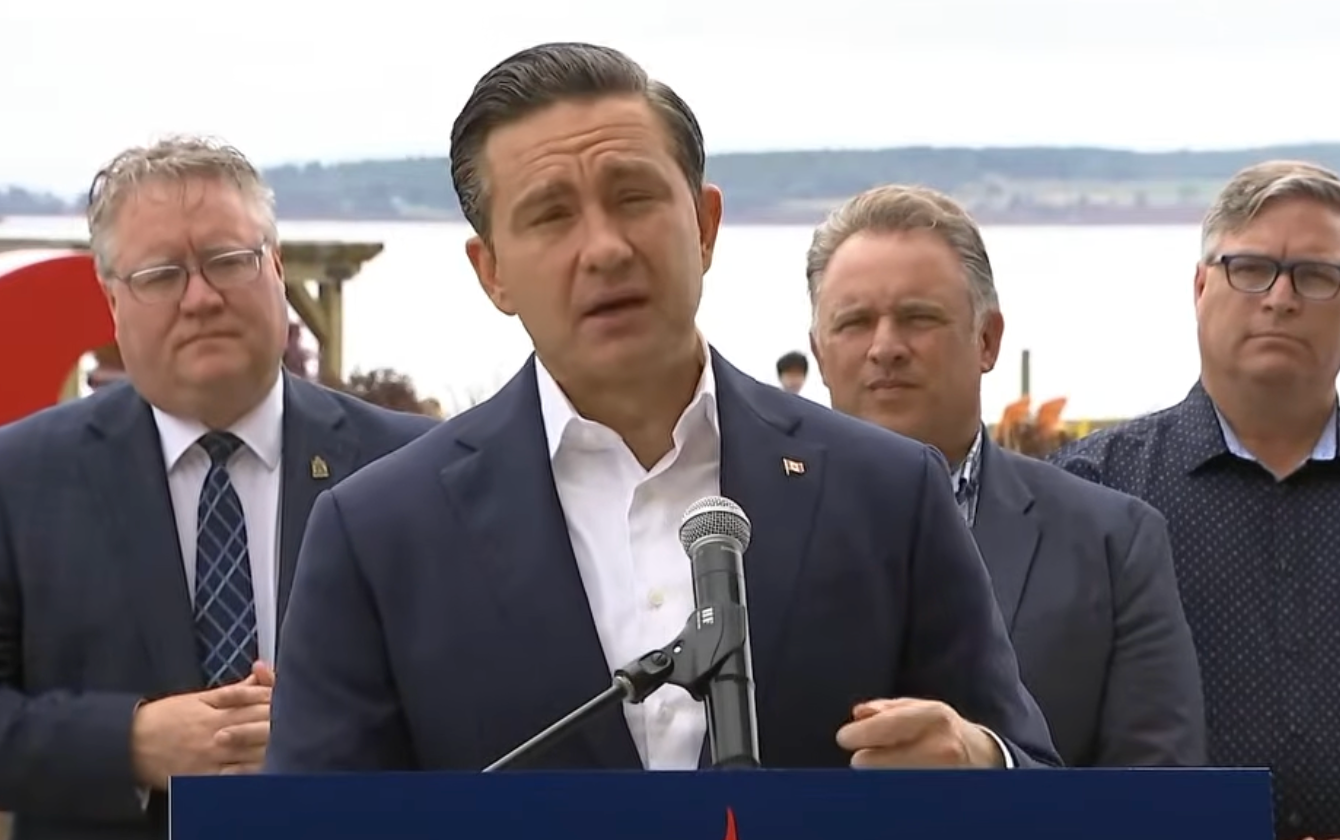
Conservative leader Pierre Poilievre has repeated his party’s call for Canada to set up a critical mineral and oil reserve to help fuel American war efforts in exchange for tariff-free trade.
Speaking to reporters in Prince Edward Island Wednesday, Poilievre said: “We should present the Americans with the prospect of a Canadian strategic mineral and oil reserve available and tailor-made for our tariff-free allies.”
“We have 10 of the 12 NATO-defined strategic minerals needed to fight a war. We have the fourth biggest supply of oil. The Americans need all of those things. Our message should be that we will tailor make a reserve of all of those resources and we will make it especially available to those countries that give us tariff-free trade.”
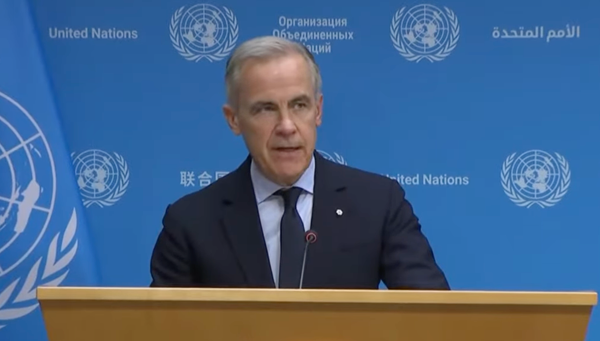
Poilievre’s renewed call came as Prime Minister Mark Carney announced this week that Canada was nearing the completion of a new trade deal with the United States.
NATO published its official list of 12 critical minerals in December 2024, citing aluminum and chromium as particularly important resources for producing fighter jets, tanks, missiles, naval vessels and artillery systems.
The U.S., the primary power within NATO, extensively used some of these types of hardware in its joint war of aggression with Israel against Iran, which Carney supported.
The U.S. Tomahawk missile, which the U.S. used to strike an elementary school in Iran on the first day of the war, has a fuselage and wing structure made primarily out of lightweight aluminum.
The U.S. already relies heavily on imports of Canadian aluminum for a wide range of critical applications. However, Canada’s aluminum industry faced severe damage in the face of Trump’s punishing trade tariffs.
There are known reserves of all 12 critical minerals on the NATO list within Canada’s borders, but Canada currently only produces and refines 10 of them. Globally, China dominates the processing and refining of the vast majority of critical minerals.
The Conservatives made the same call to create a critical mineral reserve for the Americans and other allies in a recent letter to Carney amid Canada’s trade negotiations with Washington.
Carney has previously said that Canada could become the U.S.’ most reliable supplier of critical minerals to bolster military production and power for AI facilities.
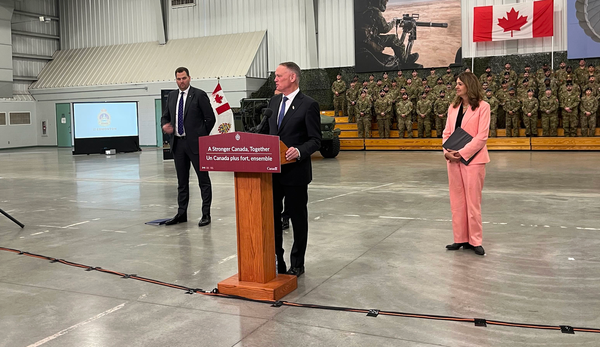
Critical minerals also feature prominently in the Liberal government’s “Defence Industrial Strategy,” which sets a roadmap for achieving 5 per cent of GDP in military spending by 2035 at Trump’s bidding.
In the face of Trump’s tariffs, the plan said the Liberal government is “committed to working with industry to help steel and aluminum producers pivot and retool to manufacture the grades and products required by Canada’s defence sector.”
“The Government will bring forward plans to expand the production, processing, stockpiling, and procurement of defence-critical minerals, while supporting coordinated action with allies through initiatives such as the G7 Critical Minerals Production Alliance and NATO-led efforts.