An independent body of the Quebec government has warned that exports of artillery propellant to the United States risk violating Canada’s international treaty obligations.
The findings of Bureau d’audiences publiques sur l’environnement (BAPE) were published online following a study into a proposed expansion of a munitions factory in Salaberry-de-Valleyfield, Que.
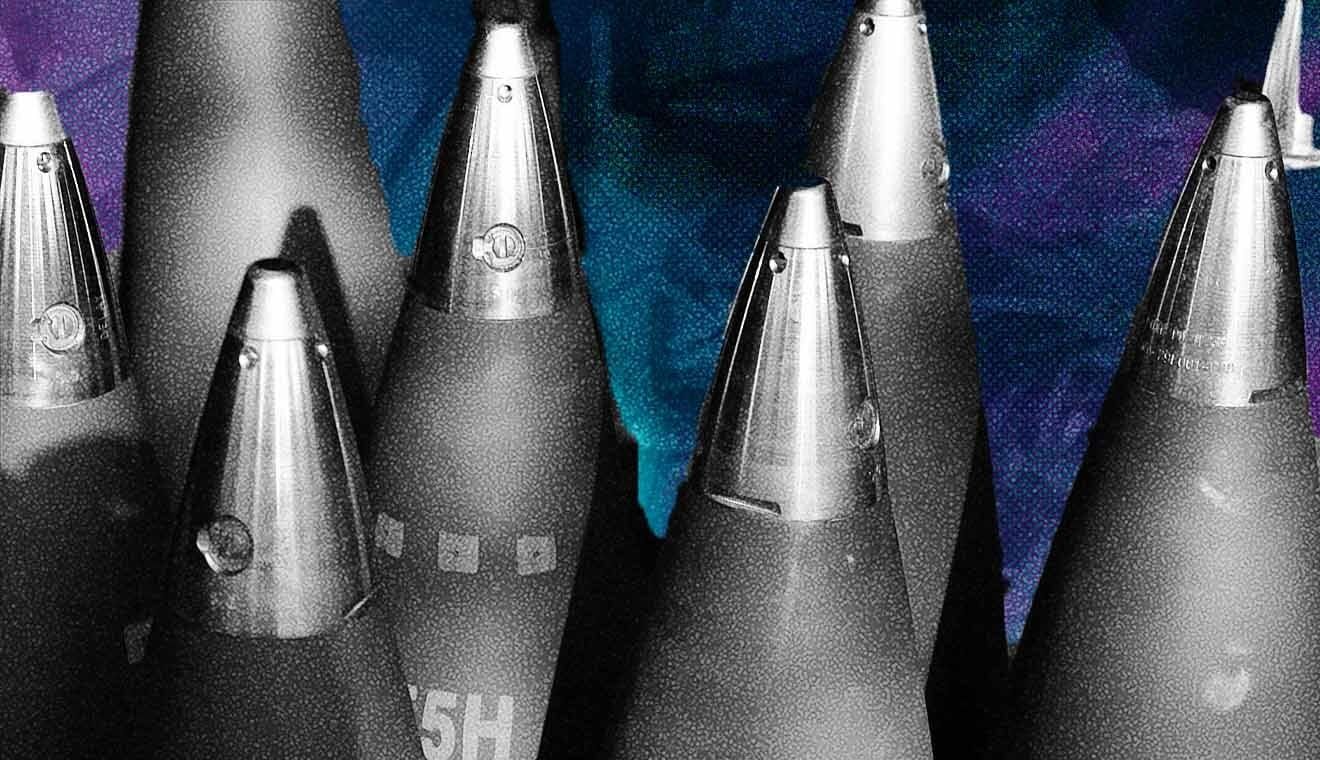
General Dynamics Ordnance and Tactical Systems – Canada (GD-OTS), a subsidiary of the American weapons giant General Dynamics, wants to expand its factory to produce more M31A2, a propellant used to fire artillery shells.
The $390-million factory expansion is being fully funded by the U.S. Department of Defense, under a contract that previously identified Israel as an end user of the M31A2. The factory expansion is one part of a larger renovation that will cost a total of $682 million.
 Emma Paling
Under Canadian law, the vast majority of military goods shipped to the United States do not require permits and are not reported in annual government disclosures.
“During its analysis, the commission noted that the export to the United States of the M31A2 propellant, targeted by the project, is exempt from licensing under the Export and Import Permits Act,” BAPE said in a French summary of its report on the GD-OTS expansion project that has been translated to English.
The summary continues:
“It considers this exemption a risk factor for violations of the Arms Trade Treaty, ratified by Canada. In accordance with the principle of sustainable development, Partnership and Intergovernmental Cooperation, it therefore invites the Government of Quebec to use established communication channels with federal authorities to discuss measures aimed at mitigating the risk of violations of international humanitarian law in the sale of arms and ammunition.”
The Quebec government did not respond to an email from The Maple asking if it had raised the matter with its federal counterparts.
In an email, Global Affairs Canada said it has “responded to questions received from the Bureau d’audiences publiques sur l’environnement (BAPE),” but did not provide any specifics.
The federal department added: “Canada not only meets its obligations under the Arms Trade Treaty, it exceeds them.”
Asked whether it was concerned that its products could be used in ways that violate the Arms Trade Treaty, GD-OTS vice president Berkley Whaley deferred to the federal government.
The Canada Commercial Corporation (CCC), a crown corporation that negotiates foreign military contracts for Canadian companies, provided a short statement by email but did not answer The Maple’s specific questions.
“CCC’s role is to conduct due diligence and risk assessments to ensure compliance with Canada’s legal obligations, including the ATT,” spokesperson Mouktar Abdillahi said.
“BAPE is an entity of the government of Quebec and CCC has responded to its questions.”
‘Bombing Does Not Liberate Anyone’
BAPE is an independent body of the Quebec government that holds public hearings on projects that could affect the environment. But in its study of the proposed GD-OTS factory expansion, many citizens' concerns were about the factory’s implications for human life in places like Gaza, Iran and Lebanon.
“Although General Dynamics claims that its production supplies the U.S. Department of Defense with munitions destined solely for Ukraine, the reality is that these weapons, once they enter the United States, are no longer monitored by Global Affairs Canada,” BAPE’s report quoted Regional Action Movement for the Environment as commenting.
“The International Jewish Anti-Zionist Network Canada shares this view,” the report continues, “arguing that the project aims to serve a foreign artillery supply chain. According to them, a Quebec company can avoid disclosing its exports to Israel by supplying the U.S. military, which in turn supplies that country.”
“For a group of over one hundred citizens, supported by some twenty groups, the sale of explosives for armed conflict is fundamentally unjust and unacceptable. They believe that ‘bombing does not liberate anyone; it only kills, exacerbates conflicts, and causes environmental damage.’”
BAPE also urged Quebec to create a new forum for the public to voice its concerns about international law and human rights, not just the environment.
The report recommends that GD-OTS be allowed to go ahead with its factory expansion with some “improvements.”