
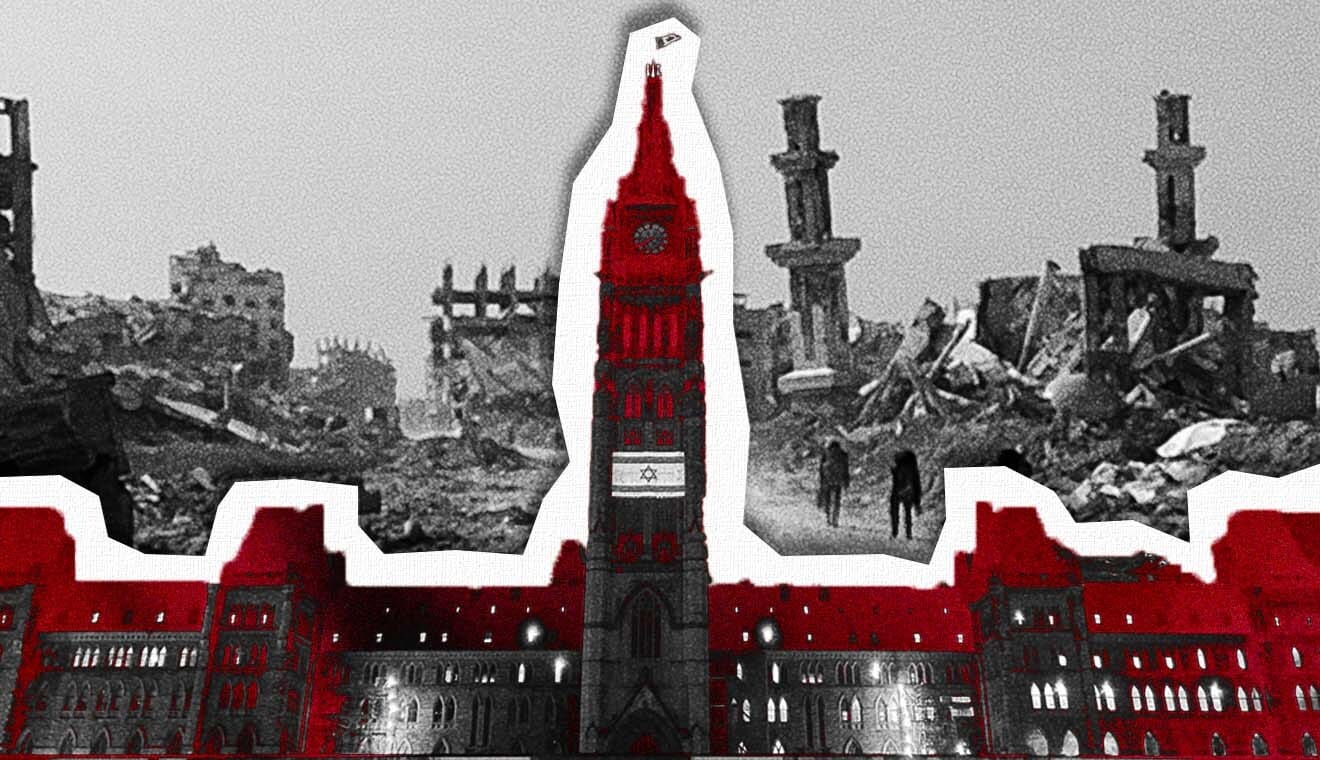
Today marks two years since the Israeli military deliberately killed Jacob Flickinger, a Canadian citizen and army veteran who was delivering aid in Gaza during Israel’s genocide there.
Although Flickinger’s death and Israel’s killing of six other World Central Kitchen aid workers sparked international condemnation, Canada’s political class seems to have forgotten about Flickinger, and quickly abandoned any calls for accountability following his death.
New analysis by The Maple shows that this is part of a wider pattern. In fact, members of Parliament have rarely named any of the Canadians killed by Israel over the past 29 months and have not followed up with calls for accountability after their deaths.
By contrast, MPs named the Canadians killed during the Hamas-led attacks of Oct. 7, 2023, much more frequently, and as recently as October 2025.
Using openparliament.ca, which keeps a record of debates and committee discussions in the House of Commons, The Maple searched the names of known Canadian citizens killed in Israel, Palestine, and Lebanon since Oct. 7, 2023.
The results show that the names of the eight Canadians killed during the Hamas-led attacks of that date were each given a tribute in the House of Commons between nine and 19 times by MPs from all the major parties over a two-year period.
The Canadians killed during the attacks were: Judih Weinstein, Adi Vital-Kaploun, Vivian Silver, Ben Mizrachi, Alexandre Look, Tiferet Lapidot, Shir Georgy and Netta Epstein.
Meanwhile, those killed by Israel during its genocide in Gaza and other attacks on neighbouring countries were named no more than three times each, and were only mentioned in the immediate aftermath of their deaths.
This means that each of the Canadian victims of October 7 were mentioned by name at least three times more often than those each of those killed by Israel since that date.
Whereas MPs typically named Hamas and issued strong condemnations of the group when referring to the Canadians killed on October 7, the representatives often characterized Israel’s killings of Canadians as tragic or accidental, sometimes not naming Israel at all.
On April 1, 2024, the Israeli military deliberately killed Flickinger and six other World Central Kitchen aid workers in a targeted air strike. MPs mentioned Flickinger by name just three times in April and May 2024, and have not mentioned him by name since.
In two of those cases, MPs did not name Israel as the killer. On April 8, then-Bloc Québécois MP Stéphane Bergeron paid tribute to Flickinger, but did not say how he died or who killed him.
On the same day, Conservative MP Chris d’Entremont (now a Liberal), in his capacity as deputy speaker, announced a moment of silence in honour of Flickinger “and of all aid workers who have lost their lives in Gaza.” He did not say how Flickinger or any of the other aid workers died.
On April 11, 2024, then-NDP MP Niki Ashton referred to the killing and named Israel as the culprit, though she did not mention Flickinger by name.
On May 6, 2024, then-Green Party MP Mike Morrice said: “Israel said it mistakenly struck a World Central Kitchen convoy, killing seven aid workers, including dual Canada-U.S. citizen Jacob Flickinger.”
However, an independent investigation had already found that the attack was not a mistake, but a targeted strike on vehicles with clearly visible World Central Kitchen logos.
In the days after the attack, then-prime minister Justin Trudeau directly refuted Israeli Prime Minister Benjamin Netanyahu’s claim that “this happens in war,” and called for an investigation.
The Israeli military’s investigation produced a report which claimed a “grave mistake” resulted in the killings. All the countries whose citizens Israel killed, with the sole exception of Canada, rejected the Israeli report.
In September 2024, Israel killed two Canadians: Hussein and Daad Tabaja, in an air strike as they fled Israel’s bombing campaign in southern Lebanon. Then-foreign affairs minister Mélanie Joly condemned the killing in a statement posted to X/Twitter.
The Tabajas were mentioned by name on just three occasions in Parliament, with the most recent mention falling six days after they were killed. There have been no calls for accountability for their deaths by Canadian MPs in the House of Commons since then.
In the first instance, Liberal MP Rob Oliphant, who was serving as a parliamentary secretary to the minister of foreign affairs, called the circumstances of their deaths a “tragedy,” and did not name Israel as the culprit.
On October 1, Oliphant named the Tabajas again, this time specifying that “an IDF air strike” caused their deaths.
“We will continue to help Canadians escape Lebanon, to ensure that they reach safety and peace and to give them advice and warnings to get out of the country as quickly as possible, before this conflict spreads even further,” he added.
Oliphant’s statement did not include any call for an investigation or for the Israeli military to be held accountable for killing the Tabajas. Instead, he called organizations deemed by the Canadian government to be “terrorist entities,” including the Lebanese resistance group Hezbollah, “a scourge on this planet.”
On the same date, Liberal MP Pam Damoff, also serving as a parliamentary secretary to the minister of foreign affairs, similarly noted that the Tabajas were killed by “an IDF air strike,” but also did not call for an investigation or accountability. She reiterated the Liberal government’s call for a “temporary ceasefire” in Lebanon.
Dania Majid, president of the Arab Canadian Lawyers Association and author of a document defining anti-Palestinian racism, told The Maple that it is not surprising that MPs quickly forget about Israel’s victims.
“It really tracks with how we generally see mainstream media or the government, different politicians, respond to anything related to Arab Canadians or Palestinian Canadians,” she explained.
“We see our community portrayed usually in a very negative light or in a very narrow light ... generally speaking, we never hear the empathy or the humanization expressed towards our community as we see expressed to other communities.”
Majid said this lack of empathy also extends to those who provide any kind of support to Palestinians. She noted Israel’s killing of American Palestine solidarity activist Rachel Corrie in 2003, and its treatment of Canadian activists who were on board an aid flotilla to Gaza last year.
“What’s being attacked is the Palestinian narrative, the Palestinian point of view, the Palestinian identity, the history,” said Majid. “And it’s attacked whether or not it’s being expressed by an Arab or a non-Arab.”
“It’s being attacked in order to protect Israel and its crimes against our communities, our population, but also attacked to protect Canada’s complicity in those crimes.”
“There is that historical racism and dehumanization of our community, but also hand-in-hand with that is when you criticize Israel, you know you will also experience that dehumanization as well.”
Relatives In Gaza
Some Canadians have reported that their relatives have died in Gaza while waiting to receive temporary visas through the federal government’s special measures program, which has been widely criticized as a failure steeped in anti-Palestinian racism.
In March 2024, Ontario resident Sawsan Karashuli discovered that her brother, Ismail Qarsholi, had died in northern Gaza while searching for food and shelter, according to The Canadian Press, leaving behind his daughter, Lina. Karashuli had applied for Canadian visas for Ismail and Lina two months before Ismail died.
Neither Karashuli nor Qarsholi have been mentioned by name by MPs in the House of Commons.
In November 2023, an Ontario resident named Eman learned that Israel had killed her brother, Ahmed, as he and his father tried to evacuate to the south of Gaza. Eman’s story has not been mentioned in the House of Commons by any MP.
 Nahid Widaatalla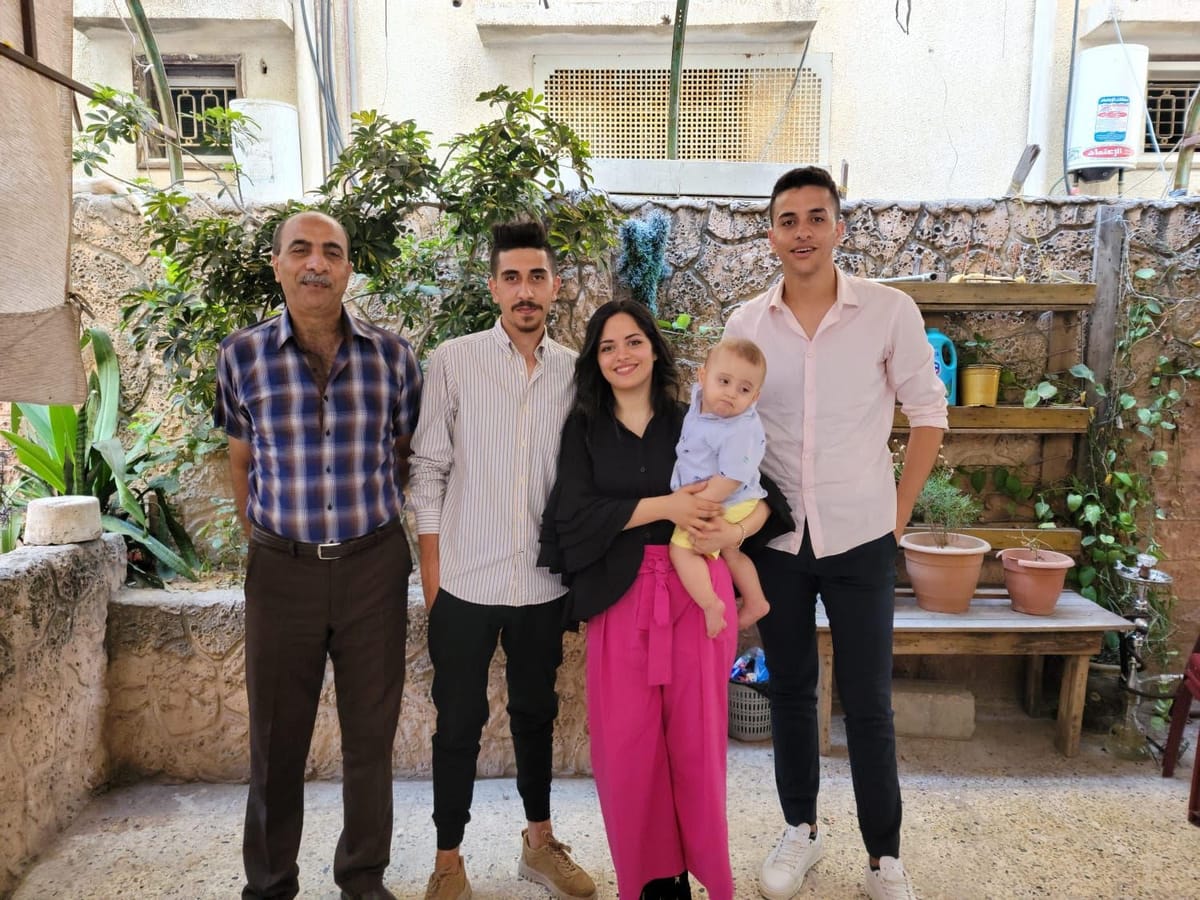
Some MPs have mentioned their constituents who were desperately trying to secure temporary visas for their family members trapped in Gaza.
In October 2023, NDP MP Heather McPherson noted that eight families living in her home city of Edmonton had lost a total of 95 family members in the space of two weeks. In November of that year, McPherson named Ahmed Alheluo, an Edmontonian trapped in Gaza and recovering from surgery.
In March 2024, Morrice, the former Green MP, named a member of his community whose family members were still trapped in Gaza waiting for their Canadian visas to be fully processed.
Immigration, Refugees and Citizenship Canada told The Maple in an email that as of January 31, 1,935 people have had their applications approved and 970 have arrived in Canada through the Gaza temporary visa program.
That figure represents just 19 per cent of all 5,000 applicants, the maximum number permitted under the program.
The program has been heavily criticized for imposing onerous security screening requirements, many of which are simply not possible to fulfill given the level of destruction inside Gaza. In order to obtain biometrics, applicants must first cross the border into Egypt, which is extremely difficult.
“It’s bureaucratic torture, where students and relatives are being killed in Gaza waiting for the Canadian government to approve visa applications, which they refuse to approve or refuse to consider complete unless biometrics are completed, knowing full well there’s nowhere to complete biometrics in Gaza,” said Majid.
“While biometrics were waived for the Ukrainians fleeing war there, this requirement has not been waived towards Palestinians who are who are trying to escape the genocide.”
Under the Canada-Ukraine authorization for emergency travel program, 298,128 people have arrived in Canada.