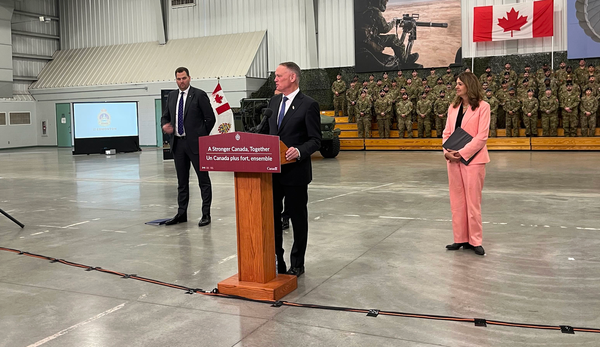

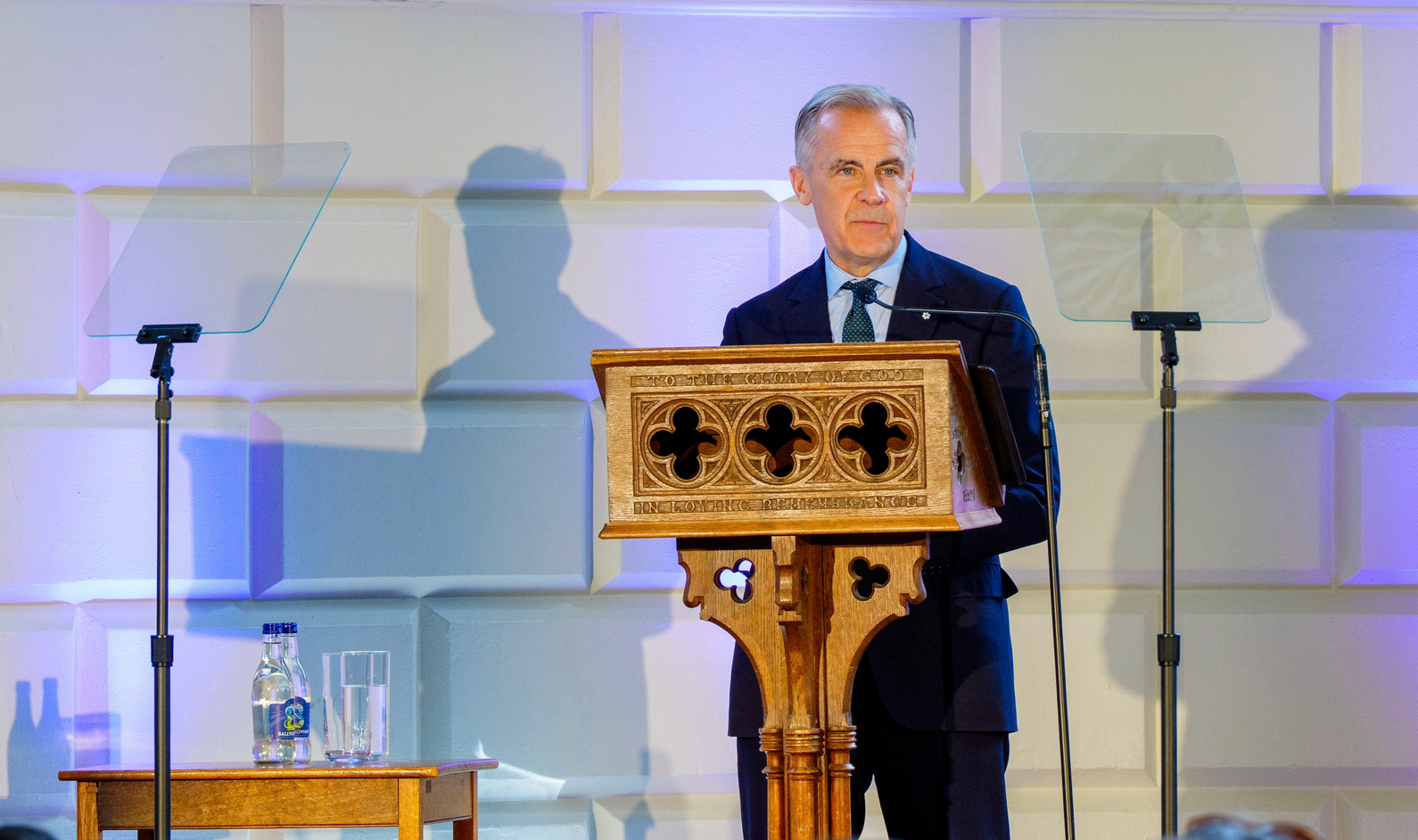
Prime Minister Mark Carney told reporters today he welcomes the latest memorandum of understanding between Iran and the United States that proposes significant concessions to Iran but leaves key issues unresolved.
Speaking from Ireland, Carney said: “I very much welcome the peace deal or the ceasefire deal, the 60-day truce [...] Canada very much welcomes this progress.”
He said Canada and its G7 allies will “see what we and other countries can do to help reinforce this important progress that’s been made.”
Carney initially expressed support for the U.S. and Israel’s war on Iran that began in late February, claiming that Iran “must never be allowed to obtain or develop nuclear weapons.”
The Canadian prime minister then said Canada’s position of support was taken with “regret” and admitted the attacks that he supported were likely inconsistent with international law.
 Emma Paling
The memorandum of understanding agrees to a 60-day ceasefire and promises to re-open the Strait of Hormuz, the critical waterway that Iran shut down in response to the U.S. and Israel’s attacks, causing a global spike in oil prices.
However, the MOU does not spell out an agreement for Iran’s nuclear program, and says details around that issue are to be resolved in future talks during the ceasefire period.
A draft of the MOU reportedly reaffirmed Iran’s existing commitment not to develop or acquire nuclear weapons.
In a joint statement with the United Kingdom, France, Germany and Italy, the Canadian Prime Minister’s Office stated: “We are prepared to lift relevant sanctions in response to clear, verifiable steps by Iran on its nuclear programme.”
Pakistan’s Prime Minister Shehbaz Sharif, who helped broker the talks, said the ceasefire applies to all battlefronts, including Lebanon.
On Sunday, however, Israeli leaders remained defiant in their refusal to stop their invasion of Lebanon, where Israel is fighting the Lebanese resistance group and Iran ally, Hezbollah.
Israel has openly declared its intention to permanently occupy broad swathes of southern Lebanon. During its attacks since March 2, Israel has killed at least 3,783 people, razed entire villages and displaced some 1.2 million people.
Canada has not yet made any direct statement regarding Israel’s refusal to abide by the terms of the MOU and has continued to authorize military exports to Israel as it wages multiple wars, including its ongoing genocide in Gaza.
 Alex Cosh
Both the U.S. and Israel have repeatedly violated previous ceasefire agreements with Iran.
However, some prominent American and Israeli commentators argued the MOU as it currently stands spells “defeat” and “humiliation” for the Americans, and a “huge problem” for Israel.
An op-ed in the Times of Israel noted that Trump has dropped calls for Iran to end its ballistic missile program and its support for resistance groups in the region, which the U.S. president initially claimed were key objectives of the war.
The war also failed to topple the Iranian government, which was touted as another key objective during the early stages of the attacks.
According to Reuters, a draft of the MOU also promised to release $25 billion of stolen Iranian assets, including via direct cash transfers, and to provide further sanctions relief.
The U.S. and its allies would also prepare a reconstruction plan for Iran, which has been battered by the U.S. and Israeli attacks. Who would pay for this, however, remains unclear.
The U.S.-Israeli war on Iran has so far killed at least 3,468 people and injured at least 26,500, according to the most recently reported data.