
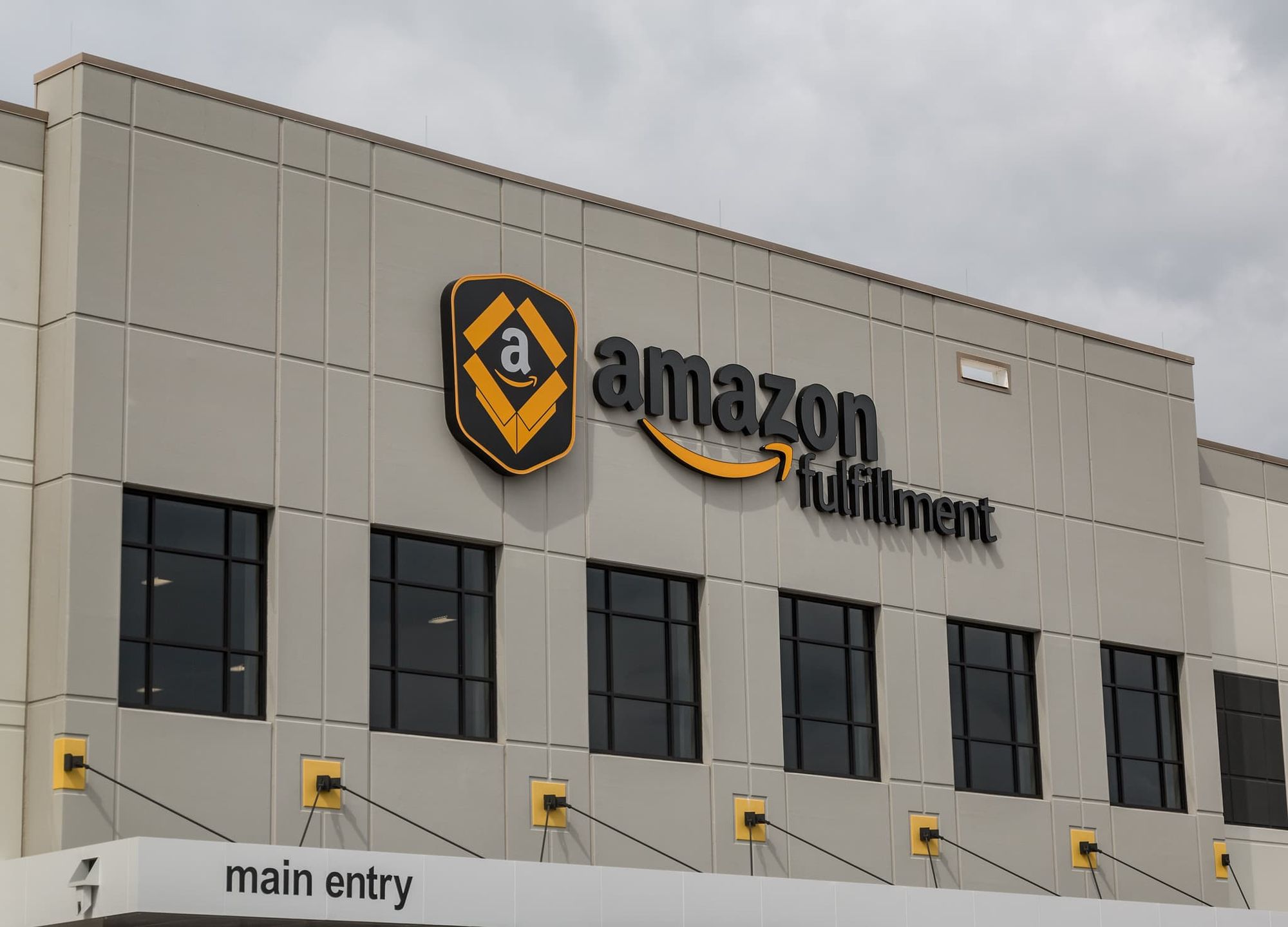

Last week, I wrote about Unifor’s new organizing campaign at Amazon warehouses across the Greater Toronto Area (GTA). The campaign, launched ahead of the busy holiday shopping season, aims to build on the union’s organizing success in British Columbia and bring collective bargaining to more of the e-commerce giant’s Canadian workforce.
Now, organizers have something even more concrete to point to: the first collective agreement at an Amazon facility anywhere in North America.
On November 13, an independent arbitrator issued a binding first contract covering approximately 800 workers at Amazon’s YVR2 fulfillment centre in Delta, B.C. The workers, represented by Unifor Local 114, have secured a three-year agreement establishing enforceable workplace rights, wage increases, improved vacation and severance provisions, and a formal mechanism for challenging management decisions.
The achievement is significant not simply because of the improvements contained in the contract, but because it demonstrates that even Amazon can be compelled to bargain collectively and recognize workers’ rights.
“Amazon told everyone a union contract would never happen, but workers proved them wrong,” said Unifor national president Lana Payne in a union press release announcing the deal. “These workers stood up to one of the most powerful companies on earth and won rights in writing that Amazon cannot take away.”
For a company that has spent years and enormous resources resisting unionization, this is a significant defeat. For workers attempting to organize Amazon’s massive warehouse network, it could represent a vital breakthrough.
From Union Busting To A First Contract
The road to a collective agreement at YVR2 was arduous for the workers involved.
In July 2025, the B.C. Labour Relations Board granted Unifor remedial certification after finding that Amazon had engaged in extensive unfair labour practices during the union’s organizing campaign.
The Board found that Amazon had hired additional workers to dilute union support and conducted a lengthy and pervasive anti-union campaign that undermined employees’ ability to freely choose union representation. Rather than allow the employer to benefit from its misconduct, the Board certified the union as the workers’ bargaining representative.
Remedial certification is an important feature of B.C.’s labour relations system. It allows the Board to certify a union when employer interference has made it impossible to determine employees’ wishes through a fair representation vote. Without such provisions, employers have an incentive to break the law during organizing drives, knowing that even successful unfair labour practice complaints may come too late to repair the damage.
Winning certification was one thing; bargaining with Amazon was quite another.
Unifor served notice to bargain in October 2025, but negotiations quickly encountered difficulties. Ten bargaining sessions between December 2025 and February 2026 failed to produce an agreement. The union subsequently sought assistance through B.C.’s first-contract mediation process.
In February, the Labour Relations Board found that Amazon had unlawfully withheld a wage increase from workers at the unionized facility that it had provided elsewhere in its regional network.
Following several days of mediation, the mediator concluded that the parties were unlikely to reach an agreement voluntarily. In particular, Amazon continued to insist that the union permanently surrender its ability to challenge productivity standards, a central concern for warehouse workers.
In August, the Labour Relations Board directed the parties to conclude their first agreement through binding arbitration. Throughout, Amazon has continued to challenge these decisions, including through applications for reconsideration and judicial review.
In a statement following the arbitration award, the company characterized the contract as unfairly imposed, complained that employees had not voted on its terms and pledged to continue its legal challenges. A separate employee decertification application also remains unresolved, with ballots sealed pending the outcome of related proceedings.
But Amazon’s objections conveniently obfuscate that it was the company’s relentless union busting and violations of the law that made statutory remedies necessary in the first place. Without these interventions, winning a first contract would have been much harder.
What Workers Won And What Remains Contested
The November 13 arbitration decision, issued by James Dorsey, establishes the terms of a collective agreement running until Oct. 31, 2029. Unifor provided copies of the award and contract to Class Struggle.
While some provisions represent improvements, others preserve existing employment conditions. The result is an important first contract, though not a wholesale transformation of Amazon’s workplace.
On wages, the agreement establishes a starting rate of $24.15 per hour for regular Tier 1 warehouse workers, rising through a progression schedule to $27.15 after three years of service. General increases of 3.25 per cent in October 2027 and 3.5 per cent in October 2028 will bring the top Tier 1 rate to $29.01. Wage provisions also protect workers if Amazon raises comparable rates at other Lower Mainland facilities before the first scheduled increase, effectively preventing the company from engaging in union avoidance by denying wage benefits to union members.
The agreement maintains employer-funded health and welfare benefits, with protections against reductions below existing coverage. Regular employees retain access to retirement savings and deferred profit-sharing arrangements, including employer matching contributions.
Workers with at least 10 years of service receive an additional week of annual vacation, bringing their entitlement to approximately four weeks. The contract also provides enhanced severance in specified permanent layoff circumstances, reaching up to 18 weeks’ worth of pay, and preserves the company’s grocery benefit and tuition assistance program.
Other provisions include scheduling protections based on seniority, providing notice of permanent schedule changes at least 14 days in advance except in unforeseen circumstances and the establishment of union representation in disciplinary matters. Workers will also have access to a negotiated grievance procedure and binding arbitration.
These latter protections are perhaps most consequential.
Amazon’s warehouse operations are notorious for their intensive surveillance and productivity expectations. Throughout Amazon’s Canadian facilities, employees’ movements and work output are continuously recorded through scanners and software systems, allowing management to monitor individual performance in extraordinary detail.
The arbitrator’s decision offers another revealing look inside this system.
According to the decision, Amazon uses what it calls a Structured Productivity Performance Review (SPPR), which measures workers’ output against that of their peers. Rather than establishing fixed quotas, the system calculates units processed per hour and compares employees performing similar tasks under comparable conditions.
Workers falling within the bottom 5 per cent of productivity can become eligible for corrective feedback, subject to additional screening criteria. The system also uses a performance threshold based on a rolling five-week period and allows management to consider operational disruptions and other circumstances affecting performance.
The consequences for workers can be serious. SPPR’s progressive process moves from documented coaching through written warnings to potential termination.
According to evidence presented in arbitration, 513 YVR2 employees received documented productivity coaching in 2025, and 168, 53, and 12 received first, second, and third warnings, respectively. Two workers were terminated following the progressive process.
Such systems raise additional concerns about workplace health and safety. When employees are continually measured against one another, the pressure to work faster can become self-reinforcing. Even without fixed quotas, workers may feel compelled to sacrifice safe working practices to avoid falling behind.
Unifor sought to fundamentally change this system. It proposed introducing a transparent work-measurement methodology that would account for ergonomic considerations, fatigue, equipment delays and the physical demands of particular tasks. The union also wanted greater opportunities to challenge productivity standards themselves.
The arbitrator declined to impose this alternative system. He concluded that the evidence presented did not establish that Amazon’s existing processes were unsafe or responsible for workplace injuries at YVR2. In his view, there was insufficient site-specific evidence to justify such a significant change through first-contract arbitration.
This is an important limitation of the agreement. Amazon retains considerable authority over its productivity systems, including the ability to modify them consistently with practices at other B.C. fulfillment centres. However, the arbitrator also rejected Amazon’s attempt to shield its productivity policies from union challenges.
As the previous mediator had observed, Amazon’s original refusal to negotiate over work organization would have effectively prevented the union from contesting the reasonableness of present and future productivity expectations. The employer wanted workers to accept these policies while retaining the power to change them.
Thankfully, the arbitrator refused to grant Amazon that protection, emphasizing that the collective agreement could not eliminate access to grievance arbitration or workers’ statutory protections against unjust discipline.
Instead, Article 20 requires Amazon to provide at least 14 days of notice before materially changing its productivity, quality or inactive-time processes. The company must explain proposed changes and, upon request, meet with the union within seven days to discuss their implications. The agreement also requires changes to these processes to be safe.
Combined with the contract’s just-cause protections, grievance procedure and health and safety provisions, these requirements provide workers with avenues to contest the application and reasonableness of management’s productivity expectations.
That doesn’t mean Unifor has secured control over work standards. But it does mean that Amazon can’t simply declare its productivity systems beyond scrutiny. Workers now have collective representation and enforceable procedures through which to challenge management decisions.
That’s an important win against a company that mere months ago flatly refused to negotiate over these issues.
Breaking Amazon’s Model Of Workplace Control
The broader significance of this contract lies in its challenge to the individualized employment relationship preferred by Amazon and other technology corporations.
Amazon presents its workforce management systems as objective, efficient and responsive to employee needs. Workers are encouraged to interact with management through applications, automated processes and individual feedback mechanisms.
But these systems also concentrate power in the hands of the employer. Workers confront productivity expectations, scheduling decisions and disciplinary procedures largely as isolated individuals.
A union contract can change that relationship.
As with the United Food and Commercial Workers’ first agreement covering Uber drivers in Victoria, the importance of unionization extends beyond particular improvements in compensation. A collective agreement establishes a representative institution through which workers can assert common interests, enforce rights and challenge decisions previously treated as management prerogatives.
Unifor’s victory at YVR2 does not eliminate Amazon’s managerial power. The company’s continuing legal challenges demonstrate that it remains determined to resist independent worker representation. Yet workers now have something that employees at Amazon’s other North American facilities have been denied: an enforceable collective agreement.
For the labour movement, the Delta experience also illustrates why stronger labour laws matter. Remedial certification prevented Amazon from benefiting from unlawful interference, while first-contract arbitration provided a way around an employer determined to resist meaningful bargaining.
Neither mechanism replaces the need to build worker organization and collective power. Indeed, the ability to enforce the new agreement and win stronger protections in subsequent rounds of bargaining will depend on the strength of Unifor’s workplace organization. But these legal protections have helped ensure that organizing efforts translate into concrete collective bargaining rights.
Unifor western regional director Gavin McGarrigle celebrated the agreement while promising to extend the campaign: “These Amazon workers now have the binding union contract they deserve and we intend to support them and thousands more improving their lives, in BC and elsewhere.”
For workers organizing in the GTA and elsewhere, the Delta agreement demonstrates that Amazon’s resistance is not insurmountable. It also provides a starting point from which future bargaining campaigns can demand stronger wages, better protections and greater worker control over the pace and organization of work.
Amazon has spent years trying to convince its workforce that unions are unnecessary, ineffective or incapable of delivering improvements.
Workers in Delta have now demonstrated otherwise. The challenge for the labour movement is to turn this first breakthrough into broader organizing victories.
Recent Class Struggle Issues
- November 16 | Amazon Workers Are Fighting For A GTA Union
- November 9 | Canada’s Unions Absent From Strike Day Against Israel
- November 2 | Nova Scotia Workers Win Estimated $470 Million Settlement