
After decades of declining union density, employer attacks and growing economic inequality, the labour movement faces both significant challenges and renewed opportunities. A new generation of workers is organizing in workplaces once considered difficult to unionize, while growing public support for unions suggests that working people increasingly recognize the need to confront corporate power collectively.
Yet enthusiasm for unions has not necessarily translated into sustained growth in membership or greater worker power. Reversing decades of labour movement-decline will require not only organizing new workplaces, but also revitalizing existing unions and building a more active, democratic, and politically ambitious movement.
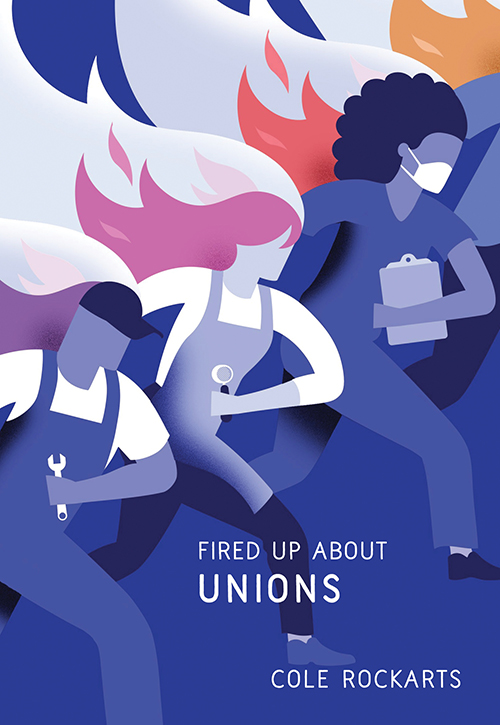
In Fired Up About Unions, out today from Between the Lines, labour organizer Cole Rockarts makes the case for why unions remain indispensable and how workers can rebuild the labour movement. Written as an accessible introduction to unions, the book examines their history, the gains they have won for working people, the political and economic forces responsible for their decline, and the strategies needed to make them stronger. Above all, Rockarts argues that unions are only as powerful as their members and that labour’s revival depends on workers recognizing and exercising their collective strength.
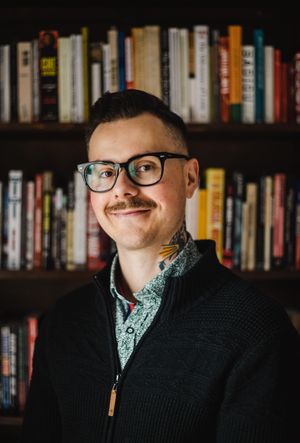
Rockarts is a labour organizer and activist who has spent approximately a decade working with unions in Canada and the United States. Their involvement in the labour movement began through student organizing at the University of Ottawa and membership in the Canadian Union of Public Employees (CUPE). They subsequently completed the Union Semester program at the City University of New York, including an internship with 1199SEIU. Their organizing experience across multiple unions informs the book’s combination of practical advice, labour history and arguments for movement renewal.
This week, I spoke with Rockarts about the motivation behind the book, the challenges facing organized labour and what it will take to build a more powerful and democratic union movement.
Adam King: First, congratulations on the book. To start, can you tell readers a little about your own background in the labour movement and what motivated you to write Fired Up About Unions? Who did you have in mind as the audience, and what do you hope readers will take away from it?
Cole Rockarts: Thank you! I’m thrilled to be talking to The Maple readers about this.
So, I first became a union member by way of the student movement. I went to a climate justice meeting, and began working on my university campus. It was after I graduated and realized that I didn’t have to stop organizing that I got really interested in studying and working for different unions.
There are many great books about unions, but not many focus on young workers specifically. I really wrote this as a guide for what I wish I knew at 20 years old when I was first getting involved in the labour movement, and I hope it serves as an on-ramp to young people seeing the labour movement as a worthwhile place to put their energy and ideas. While this book really is for young people, I believe that people new to unions at any age can benefit from it. I hope that people leave understanding that regular people, workers, have the power to win.
AK: One of the central arguments of your book is that unions are fundamentally about power. You emphasize that unions aren’t third-party organizations that act on behalf of workers, but rather vehicles through which workers exercise their collective strength.
Can you explain why you think this distinction is so important? What does it mean in practice for workers to understand that they are the union, rather than simply belonging to one?
CR: The best staff organizers in unions know that we can’t win anything unless workers themselves participate. Staff don’t work with rank-and-file leaders in their workplaces — we can be skilled in the political analysis, or implementation of a campaign structure, but at the end of the day we don’t have the same relationships that a worker has with their coworkers. We also don’t understand their jobs. I’ve worked for a number of health-care unions, but I’ve never worked in a hospital — and workers are the experts in their own experiences.
There’s been great work done on the difference between “service” or “business unions,” where union members see their organizations not as places of power for themselves, but as a transactional space where they pay their dues and they get their contract or their dental plan in exchange. So I won’t go into that too much here, but there is a distinction, and I’ve felt this, working in both business unions and organizing unions.
Organizing unions have a completely different political orientation to the work, and actually believe that members themselves have to lead. Workers who believe and behave like they are their unions understand that their involvement is the only way they can win. What that means is a lot of participation, making decisions, talking to their coworkers constantly about what they want to change in their workplaces and running their unions themselves. Whether that’s in smaller ways, like participating in union meetings, voting, electing union leadership in contested elections or representing their coworkers in meetings with the boss, there’s a number of examples of how members can own their unions in a real way.
In my experience, organizing unions (where members are the union) also win a lot bigger, get higher raises, take risks, engage in job action and ultimately achieve better contracts.
AK: You devote considerable attention to the history of the labour movement and the enormous gains unions have won, not only for their own members but for working people more broadly. Yet, as you also document, unions have been weakened over the past several decades.
What do you see as the main political and economic forces responsible for this decline? To what extent has the weakening of unions contributed to the growing inequality and economic insecurity workers face today?
CR: I think it’s hard to pick just one main reason, because there are political, legal, economic and global factors at play. In Fired Up About Unions, I write about a few of these reasons — but the one I’ll focus on here is the massive amount of resources that go into stopping workers from unionizing, and then even after that, if workers can scrape through a union election, stopping workers from getting their first contract.
Last year in the U.S., union busters spent more than $1.5 billion [USD] to stop workers from forming unions — and that’s just the reported activity. This ranges from bosses themselves to employer-hired law firms, who intimidate, lie and pressure workers into voting “no” in union elections. I would be very curious what these numbers look like in Canada, but I would think it’s not drastically dissimilar.
This anti-unionism is of course enforced by politicians and courts that want to stop workers from being able to challenge the power of business. We need look no further than Prime Minister [Mark] Carney, who is now trying to limit the biggest power workers have by attacking federal workers’ right to strike. As you rightly point out, it’s a cyclical process where the decline of unions means less ability to protect pro-worker legislation. Since unions raise wages, lower union density in an area often means that those geographies have lower pay, which leads to higher wage disparities.
AK: Despite this longer-term decline, there seems to be renewed enthusiasm for unions, particularly among younger workers. Your book discusses recent organizing campaigns at workplaces such as Amazon and Starbucks, as well as the challenges confronting workers in increasingly precarious employment.
What’s driving this renewed interest in unions? And why hasn’t growing support for organized labour necessarily translated into a more substantial increase in union membership and bargaining power?
CR: In terms of what is driving the renewed interest, I think it’s because of how bad things have gotten. The cost of living crisis, the place that young people are in as they enter the world of work for the first time — it’s a time of great uncertainty. Many people need multiple jobs just to be able to afford their rent, and so workers are fed up. Either you quit your job, or you make it feasible to stay, and more and more workers are seeing unions as the mechanism to do that.
The interest in unions isn’t directly correlating with how many workers are actually joining unions, because it continues to be extremely hard to form unions. Union certification campaigns also take many months, sometimes over a year, to build enough interest and support to be able to run a successful certification vote. For this reason, many unions rarely move forward with filing for an election unless they are confident they have the majority to win. This can also often look like organizing smaller shops, instead of big workplaces that take more time. Obviously if you’re organizing 30 workers at a coffee shop, it doesn’t require as many resources as hundreds of workers across hundreds of schools in a school district. So unions can be quite cautious about where they organize, and we sometimes don’t choose the most strategic locations.
Amazon and Starbucks workers have organized in droves, but many of those workers, especially in Starbucks’ case, are still fighting for a first contract. So if we as a movement continue to not win enough elections to maintain our current density (in the U.S. and Canada), employers continue to pocket profits to put towards the funding of anti-union politicians, pass anti-worker laws and run even more union-busting campaigns.
When workers unionize, they have 12 months to get to a first contract, and then the employer can come back in and get another shot at crushing the union through decertification. We see this happen a lot, especially in the U.S., and so ultimately this results in fewer workers being covered by collective bargaining agreements. This is even before mentioning the politicians who are actively gutting unions and violating workers’ rights — from [U.S. President Donald] Trump to Carney.
AK: Although the book makes a strong case for unions, you’re also clear that the labour movement has its own shortcomings. In particular, you argue that unions need to become more democratic, participatory and responsive to their members.
What do you think unions have gotten wrong in how they organize and engage workers? What would it take to build stronger unions that encourage rank-and-file initiative and participation, rather than relying primarily on elected leaders and professional staff?
CR: Unions of course need to be organizing more, but also engaging workers through political education. One of the best forms of this type of education is getting workers strong enough to strike. There are ways that workers can and should be, with the encouragement and support of union staff, [led] to practice ‘small d’ democracy on the shop floor, to build up their confidence to take big risks, and take big action.
I think one of the biggest problems is that we allow union leaders to stick around for too long. Many unions don’t have term limits, and many unions run uncontested leadership races, where the same person that has been union president for 20 years gets elected again, instead of fostering real debate, growing the capacity of union members to be able to hold this type of elected position, and equipping people with creative ideas and new energy to challenge the “way it’s always been done.”
AK: Another theme running through the book is that unions need to be about more than negotiating better wages, benefits and working conditions for their members. You discuss the labour movement’s historical role in advancing broader social and political demands, as well as the importance of building solidarity across workplaces and communities.
How can unions reconnect workplace struggles to larger fights over inequality, housing, climate change and other social issues? Why is this broader political vision important to labour movement revival?
CR: In my hometown of Mississauga, [Ont.,] workers just organized at Walmart. While the law certainly helped, the strategic choice that Unifor made to run an election at this particular Walmart was also helped by its location.
I’m always heartened when I see unions going after places that many years ago people said couldn’t be organized. Walmart is obviously one example of this, but of course the wall-to-wall work of targeting Amazon and their suppliers is really exciting as well. I do think there is a lot of energy in the U.S. right now from the labour movement around protecting immigrant workers, and I think any day that workers are acting beyond bread and butter issues (just wages and job benefits) and building the world that we want is a good one.
AK: The final chapters of the book are particularly concerned with what workers can do to strengthen their unions and build collective power. Based on your experience as an organizer, what strategies and approaches do you think are most promising for rebuilding the labour movement? Are there examples of recent organizing campaigns or union struggles that illustrate the kind of worker-led organizing you think the movement needs more of?
CR: One of the things that I’ve been thinking about a lot is the role that unions need to be playing in housing organizing. One of the biggest things workers are facing alongside the cost of living crisis is sky rocketing rent. When workers win raises at the bargaining table, a lot of that quickly gets siphoned away to landlords. I think there are stronger partnerships we can form with housing justice organizers. I’m constantly inspired by the work coming out of the Bargaining for the Common Good network, and the more examples we have of unions leveraging their power to win beyond the contract and beyond the electoral cycle for real structural investments in our communities, the more workers will see unions as places of real promise and a tool to win material changes to their lives.
AK: Last, your book is ultimately an optimistic one, despite the significant challenges facing unions. You make the case that workers already possess the collective power needed to transform their workplaces and society, but that realizing this potential requires organization and active participation. What gives you hope about the future of the labour movement? And what would a genuine revival of organized labour look like to you over the next decade?
CR: There are two things that are bringing me a lot of energy: all of the youth-led protests that aren’t necessarily the union movement, but the labour movement more broadly – young workers from France to Argentina, Portugal to India. It seems like a global moment and movement right now and workers and unions are following. Another Canadian example and something I saw this morning is the Unifor 444 vote, who packed the Windsor Coliseum for their Stellantis strike authorization meeting, and voted 97 per cent to go out on strike. I haven’t seen a type of action like that in a long time. If organized labour can be doing more of these actions, big public displays of unity and supporting tomorrow’s generation of workers, I think that would be a great start.
 Cole Rockarts
Recent Class Struggle Issues
- October 19 | Canada’s Minimum Wages Are Rising, But Not Enough
- October 13 | Is Doug Ford’s Government Really Working For Workers?
- October 7 | Who Is Seeking Justice For Injured Workers?