

In 2024, more than 342,000 lost-time claims were made in Canada while roughly 1,046 workers died from workplace accidents or occupational diseases.
Provincial workers’ compensation insurance systems are supposed to be there when injured workers or the survivors of deceased workers need them. Yet these bodies are often plagued with issues, from employer claim suppression and inadequate benefits, to the stigmatization of injured workers and policies geared more toward returning workers to the job than protecting their long-term health.
This week I sat down with Marion Endicott and Steve Mantis, the authors of Who Killed Sir William?, published by FriesenPress, to talk about the plight of injured workers and their efforts to build community-based research and change.
Endicott worked for 40 years as an advocate for injured workers. In addition to being a leader in the community-based research project detailed in Who Killed Sir William?, Marion’s principle work was at the Injured Workers Community Legal Clinic.
Mantis was the community lead in the Research Action Alliance on the Consequences of Work Injury (RAACWI). He lost his arm in an industrial accident 45 years ago and has continued to fight for the rights of injured workers, including emphasizing the need for long-term tracking of injured workers in the compensation system. Mantis was previously a board member of the Workers’ Compensation Board, and he currently is involved with the Ontario Network of Injured Workers’ Groups, the Thunder Bay and District Injured Workers Support Group, the Centre for Research on Work Disability Policy, and the Lakehead University’s research institute, Enhancing the Prevention of Injury and Disability at Work.
Adam King: First, congratulations on a very interesting and useful book. To start, maybe you could tell readers about the RAACWI and the work the alliance did over its history.
Marion Endicott: Thanks so much, Adam. There’s so much we could cover here but let’s just give you the short answer. The RAACWI was an eight-year research project funded under the Social Sciences and Humanities Research Council program called CURA which stands for Community University Research Alliance.
This was a unique program that demanded a shared leadership in the research project between the university and the community. It took us two years to develop our team, which included about a dozen professors from six universities in Ontario and about 25 or 30 members of our injured worker community in Ontario.
We integrated a detailed program of knowledge mobilization right from the start to ensure that the research got used in a very meaningful way. The two years before we ever got any funding was used to build trust between all the participants in the initiative and establish a common language, a common understanding of the issues we were facing. We developed a structure that had shared governance and had a steering committee that oversaw the project that was representative of the four research theme areas, which were the History of the Workers’ Compensation System and the Injured Worker Movement, Financial Security, Health Outcomes and Healthcare Utilization, and Legislation, Policy, and Practice.
Overall, the project produced about 25 research papers, an Injured Worker Speaker School, a theatre piece, a highly engaged community of injured workers speaking up with confidence and increasing academic interest in the workers compensation system and how it serves injured workers and their families.
AK: Now let’s turn to the book itself. How and why did you decide to write the book? What lessons did you hope a book based on the experience of the RAACWI could offer to other researchers and activists? Last, perhaps you could start by explaining who “Sir William” is and why his name graces the cover of your book?
Steve Mantis: Sir William was Sir William Meredith, who was the Chief Justice of the Superior Court in Ontario in the early 1900s. He was commissioned by the Ontario government to lead a royal commission looking into the consequences of industrial accidents and fatalities and bring forward recommendations on how to build a system that could potentially both support workers who became injured or their survivors and also to protect employers from litigation that was becoming increasingly successful in the day.
Workers’ compensation developed in Ontario in 1915 as a result of Sir William’s report and it was the first part of our public social safety net, almost 40 or 50 years in advance of Employment Insurance, the Canada Pension Plan, and public health insurance. Studying the history of how it came about and the principles that were brought forward by Sir William has helped us to ensure that the system lives up to its potential.
ME: While Meredith was a conservative, he did not shirk from the complete understanding that employers would always seek to minimize the nature of the injury, the severity of the injury and the cost that should be associated with paying the worker and/or his family the compensation that they deserve.
One of the key principles was that the system should be non-adversarial, employers would not be able to challenge a worker’s claim. The system would be administered by a public, independent body, the Workman’s Compensation Board. Employers were to fund the system but be saved from the cost of suits and the related financial uncertainty. We learned that these were actually excellent principles. Unfortunately, these founding principles have been lost in the intervening years. The system has become extremely adversarial.
Another one of the principles is that compensation should be for as long as disability lasts. This has completely disappeared, so we named the book, in a way, invoking Meredith’s name as a way to know our history and to use the history in order to fight for justice.
Upon completion of the research project, we felt that we had had some significant success and that in order to share that success, we should write this book. We wanted to help other social justice groups to build capacity including how to partner with universities to use research to improve lives. We felt such a book would be useful to the academic world as well.
AK: This is a book about bringing academics and community-based partners together. Though those kinds of relationships can be fruitful, they are also challenging at times. Academics face the demands to publish and meet university and research expectations, while community groups and activists often have more immediate and pressing concerns. Tell us about what you learned about building these relationships and how you see them contributing to positive change when it comes to injured workers.
ME: What a good question, Adam. We were lucky to be able to recruit a number of senior professors who had already acquired tenure so that they had the ability to spend more time and not be beholden to the publish-or-perish imperative that younger academics are subjected to. They were able to interest some of their graduate students to become involved in the initiative.
There was so much learning to do about each other, about the constraints that each group and individual may have on them, and how to effectively work together. We talked already about building trust. We did that through a number of all-day workshops where we would ensure that everyone was able to contribute, to be able to really gain that greater understanding of each other, both on a personal level and on an organizational level. We were building relationships.
We were able to hammer out issues like what our budget would look like, how much money could go into the community development aspect of the project, what our knowledge mobilization plans would be and what our governance structures were.
All of those meetings and the time spent on those was really establishing a foundation on how our project unfolded. Once we had established that level of trust we were able to be more flexible with how some of the actual research unfolded.
AK: A key theme of the book involves centering the voices of injured workers themselves. So it’s not only that you brought academics and community leaders together, but also those most impacted by the shortcomings of the workers’ compensation system: injured workers. Why was that so important?
SM: This is a central part of both the challenge and the success of our project. Our belief is that people with lived experience have a perspective that is unique.
We talk about knowledge mobilization, having that interaction where injured workers could share their stories and experiences even before the projects were developed as a way of sharing our knowledge with the researchers to help them frame the work going forward.
We want to underline the importance of the knowledge that resides in the lived experience of the injured workers and their family members. It was shocking to us at first to understand that the knowledge of the community was not actually considered to be knowledge from a research perspective because it wasn’t knowledge that had been peer reviewed.
But over time, the academics began to appreciate that the injured worker community members really did have a kind of a knowledge that made the research questions more relevant, deepened analysis and made the research outcome itself something that really could be of use to the injured worker community.
There was also an understanding that the injured workers community had immediate and evolving demands that could not wait for research completion. The RAACWI meetings ensured that these developments and related actions were part of the project environment.
AK: What were some of the key findings of the research project? Where is workers’ compensation most failing to live up to the principles of Sir William Meredith?
ME: The research confirmed that if a worker became permanently disabled, they had a very high probability of falling into poverty, unemployment, family breakdown and mental illness. We’d been seeing that anecdotally, but now we had hard data. The present workers’ compensation system is failing a large portion of those workers most in need of help.
In terms of how the whole system works, we were able to focus a fair amount of our energy and resources on looking at the issue of “experience rating” in the workers’ compensation system. When we look at why workers are not receiving the compensation they are entitled to, it links back to the policies at the compensation board, such as experience rating.
Experience rating is a practice in the private insurance industry which has been inappropriately transferred to the workers compensation system. The Board assesses the risk in each employer cohort, and if an employer has a higher cost of claims (benefits to injured employees) than normal, they’re going to pay higher premiums.
Meredith laid out among his principles that there would be a collective liability, much like our public health insurance. If you use the hospital more than others you don’t have to pay any more, that’s collective liability.
We had an international gathering on this issue and we heard from people around the world that as our public systems moved into this private model, the workers, who the system was set to serve, are the ones paying the price. The system has become adversarial.
SM: Another related study was on frontline workers. The researcher was granted access to the Board staff and to listen to conversations of the adjudicators, the people who were talking directly to injured workers and making the day-to-day decisions on their claims, including initial entitlement. The study noted that there was a very different approach between how the employer versus how the injured worker was spoken to and thought of by the adjudicator. The employer was given slack when they were complaining about the high cost of the system, but if the injured worker was complaining that the system wasn’t serving them properly, they were considered to be malingerers and people just looking out looking for easy money.
Another study coined the term “the discourse of abuse.” It showed how when injured workers return to work after their injury, they would suffer bad working conditions and stigmatization by the employer. This is related to experience rating.
Overall, the research really helped to show the adverse experience of workers after workplace injury or illness due to the effects of the Board’s policies and practices.
AK: Can you tell us how you mobilized the knowledge produced by the research alliance? What changes did you aim to make and how would you evaluate your success?
ME: Previously, we weren’t able to capture whether there had been a change in terms of the outcomes for the workers themselves because that’s never been tracked. There was no valid benchmark. The work that we were doing was really breaking new ground. Looking at outcomes over a period of three to five years was unique as most research looks at outcomes measured at six months and that rarely tells the story.
We saw some positive things. We saw a government that started listening to us a little bit more because we had some credibility with some of the academics. We developed a partnership with management at the compensation board, the WSIB, around the issue of stigma. It was quite an amazing experience. We met on a regular basis over two years with six members of our RAACWI team, two legal experts, two researchers and two injured workers and about 10 WSIB managers. Together, we agreed that the WSIB creates stigma towards workers. Once that was acknowledged, we developed a nine-point action plan to eliminate that stigma.
SM: Through the RAACWI years, a fair number of the injured workers that were active in our program became leaders in our movement and many of them are still in leadership positions today. Some of the training programs that we developed during the initiative continue today and continue to train new leaders. Building the movement was one of our main goals.
In terms of the external knowledge mobilization, one of the most exciting was the production of a play called Easy Money.
In terms of the internal knowledge mobilization, the History Theme produced most of the really valuable knowledge the injured workers could use to build their confidence. It was through that theme that we really studied the Meredith principles, that we understood the underpinnings of the workers’ compensation system.
Understanding how their own story fit with the loss of those principles really gave injured workers a powerful voice with which they could then reach externally, to the minister of labour, to the policymakers, to the media. Effectively combining the research, their personal story and the history makes the compelling points for the need for change.
AK: Last, what lessons can you offer for other labour scholars, advocates and activists looking to build similar community-based projects aimed at changing conditions for workers?
ME: This is one of the main reasons why we wrote this book. If as a labour scholar, you actually want to make a difference in terms of improving the lives of workers, improving working conditions, building the power and solidarity of workers, this book is for you. As we look at our history, it is building a social movement with lots of people that is able to pressure governments to take steps that are going to be more in favour of workers.
On a more technical basis, we found that there was a huge advantage to get funding for a multi-year project. That allowed us time to build, allowed us time to gain depth. That’s one big piece of advice.
Another is to be prepared to take the time, have the patience, to build relationships and to maintain them. This will reap huge benefits to the value of the research. Our book has put particular emphasis on processes to build and maintain strong, exciting, productive relationships for social change.
Rarely do we see that research evidence will actually change the political directions within our government. It is the power of the community, the power of the workers that in combination with the evidence can bring a substantial change. We encourage folks in labour studies who really care to make the change to engage deeply with the community that’s going to take the work forward. Our book can give you some help on how to accomplish that.
 FriesenPress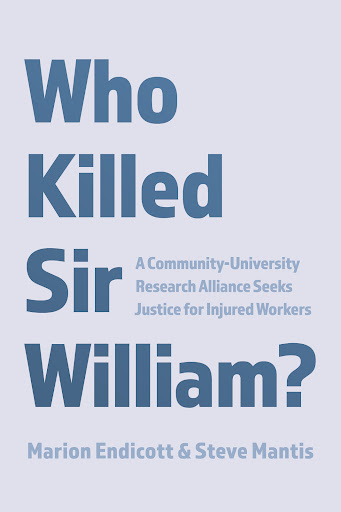
Recent Class Struggle Issues
- September 28 | Bill C-39 Poses An Existential Risk To Strike Rights
- September 21 | Doug Ford Is Eroding Ontario’s Public Schools
- September 14 | The Manitoba NDP Has Betrayed Striking Dynacare Workers