Month In Review: Status-Quo Election Outcome Belies Important Shifts In Canada’s Political Landscape
Despite the election delivering little change in the make-up of Parliament, notable shifts have occurred in this country’s political landscape.
Alex Cosh is the news editor of The Maple.
Despite the election delivering little change in the make-up of Parliament, notable shifts have occurred in this country’s political landscape.
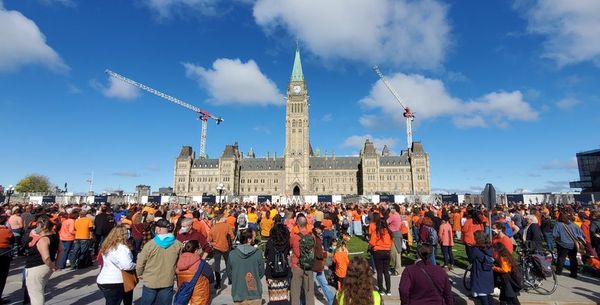
Marking Truth and Reconciliation Day was a recommendation of Canada's Truth and Reconciliation Commission, but the holiday only came to pass because of the efforts of residential school survivors.
“I don't have a plan (to run for leader), but I'm weighing it very carefully. I've been encouraged by a great many people to run."
"I don't have a plan, but I'm weighing it very carefully. I've been encouraged by a great many people to run."
“What the pandemic has done has just driven home how vulnerable we are to the pharmaceutical industry.”
“The language (the PPC) use — the ‘cult of diversity,’ the ‘flow’ of refugees, that sort of language — that's classic far-right language, white nationalist language.”
“The COVID conspiracy movement and the far-right are not happy with Erin O'Toole. So this time around, many more of them decided they weren't going to vote strategically, and they were going to vote for the PPC.”
Data shows that of the Liberals’ top five strongest showings, four were in ridings located in urban centres in Ontario. The Conservatives’ five strongest ridings were all in rural districts in Saskatchewan and Alberta.
The idea of introducing a wealth tax is popular among Canadians, with 89 per cent supporting the policy overall, including 84 per cent of Conservative voters.